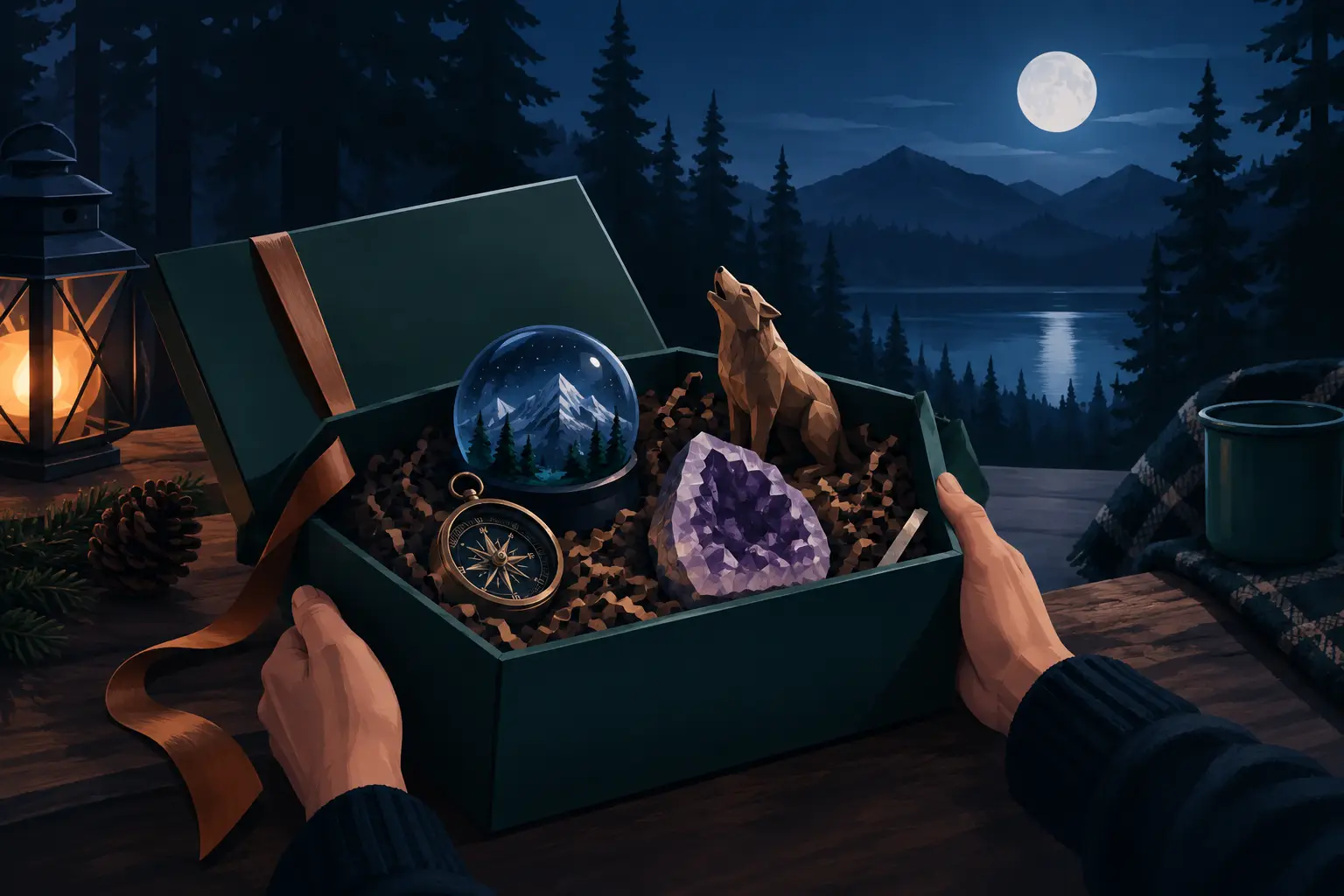
A good strange gift does more than surprise someone for ten seconds. When you gift unusual collectibles, you give them a new piece of a world they already love - something with a story, a place, and enough personality to earn a permanent spot on the shelf.
That is the difference between a novelty and a keeper. A generic trinket says, “I needed a gift.” A collectible tied to a monster sighting, a roadside legend, a favorite city, or an old campfire tale says, “I know what makes you light up.”
For cryptid fans, horror people, folklore readers, toy-art collectors, and anyone whose idea of Americana includes something lurking beyond the tree line, the best gifts are rarely the obvious ones. They feel discovered. They carry a little mystery. And they give the recipient a reason to tell the story again.
How to Gift Unusual Collectibles With a Story
Start with the person, not the object. The collectible does not have to match their existing display perfectly. In fact, the best find may introduce a new corner of their interests. But it should connect to something real: a place they are from, a trip they loved, an animal they obsess over, a favorite scary movie, or the kind of weird history they always bring up at parties.
Regional identity is especially powerful. Someone from New Jersey may have heard the Pine Barrens stories their whole life. A friend who moved away from West Virginia might appreciate a creature that brings home-state folklore back into their apartment. A road-trip companion may love a figure connected to the state where you got lost, found a diner, and heard a legend that refused to leave your head.
Folklore makes a collectible feel less like decoration and more like a tiny artifact from an alternate American atlas. The creature is not just cool-looking. It belongs somewhere. That sense of place gives a gift emotional weight without making it sentimental in a predictable way.
The story should be easy to share, too. You do not need to write a research paper in the card. A line or two is enough: “This is from the state where we took that weird midnight detour,” or “I found a monster from your neck of the woods.” The gift becomes a conversation starter before it ever reaches the display case.
Choose Character Over Random Weirdness
“Unusual” can mean many things. It can mean rare, handmade, vintage, creepy, obscure, limited-run, or simply unlike anything at a big-box store. None of those qualities automatically make a gift good.
Random weirdness often has a short shelf life. A bizarre object may get a laugh, then vanish into a drawer. Character is what makes someone want to look at it again. Look for a collectible with a clear silhouette, an expressive face, a memorable name, or a folklore connection that gives it a life beyond the packaging.
This is why creature figures work so well as gifts. They land between art object, toy, mascot, and monster. A good figure can be playful without being childish, eerie without being grim, and displayable without requiring a glass case or an advanced degree in collecting.
It also helps to notice what kind of collector you are buying for. Some people want pristine packaging and numbered releases. Others want the figure out in the open, standing beside books, records, plants, and old movie posters. Some want a single favorite creature. Others feel the call of completion collecting and immediately start asking what comes next.
Neither instinct is better. The right gift respects the way they enjoy things.
Let the Gift Match Their Kind of Strange
A monster fan is not one species. One person wants shadowy, unsettling folklore. Another wants toothy little weirdos with big personalities. A third is drawn to old maps, local history, and legends with conflicting versions. Pay attention to the flavor of strange they already enjoy.
For the person who loves horror, choose something that carries atmosphere. They may enjoy a creature with a creepy origin, an ominous expression, or a legend that feels at home near a stack of old paperbacks.
For the folklore enthusiast, prioritize regional roots. They will appreciate the difference between a creature that is merely monster-themed and one connected to a specific American story. The details matter: where it was seen, what communities say about it, and why the legend endured.
For the design-minded collector, the figure itself may matter most. They may respond to sculpt, color, pose, and how a character reads from across a room. A strong collectible can fit into a carefully arranged display while still looking like it wandered in from somewhere much stranger.
For the friend who insists they are “not really a collector,” do not overthink it. One distinctive piece can start a collection. A monster from their home state or a place they love gives them an easy entry point. No homework required, though they may soon find themselves wanting a second sighting.
Give Them a World, Not Just a Thing
The most memorable collectibles hint at a larger universe. That does not mean you need to buy a massive set all at once. It means the first piece should feel like it has neighbors somewhere out there.
A state-by-state creature collection is especially good at this. Each figure can stand alone as a gift while pointing toward a bigger map of American legends. There is a satisfying tension in that idea: one little monster on a shelf, fifty states full of stories waiting beyond it.
Fablins approaches this world through “50 states. 50 legends.” The appeal is not only in meeting a new creature. It is in seeing American folklore as a living, collectable landscape, full of regional oddities that deserve more attention than the usual famous names.
That larger framework also makes future gifting easier. If the first figure lands well, you have a path for birthdays, holidays, graduations, housewarmings, and the occasional “this reminded me of you” surprise. You are not repeating the same gift. You are adding another chapter.
There is a trade-off here. Completion-minded collections can become expensive if you feel pressure to keep up with every release. The best approach is to let the recipient set the pace. Buy the creatures that mean something, not every creature just to fill a checklist. A collection should feel haunted by delight, not obligation.
Make the Presentation Part of the Legend
You do not need elaborate wrapping to make an unusual collectible feel special. In fact, overdoing it can steal attention from the piece itself. Let the object be the reveal.
A simple gift bag, tissue paper, and a handwritten note are enough. If the collectible has a regional connection, mention it in the note. If it recalls a shared trip, a hometown, or an inside joke, say so plainly. The personal association is what turns a cool object into their cool object.
Timing can matter as much as occasion. An eerie little figure makes sense at Halloween, of course, but it can be even better in February when winter has become unbearable, or as a housewarming gift for someone building their first truly personal space. Unusual collectibles are also excellent for people who are difficult to shop for because they do not ask them to need anything. They ask them to enjoy something.
If you are unsure whether a figure is too niche, use the shelf test: can you imagine this person proudly placing it where other people will see it? If the answer is yes, you are close. If you can already hear them explaining the creature’s legend to a guest, you found the right one.
The best strange gifts do not need to be explained away. Give someone a creature with a past, a place, and a little mischief in its grin. Then let it haunt their shelf in the best possible way.