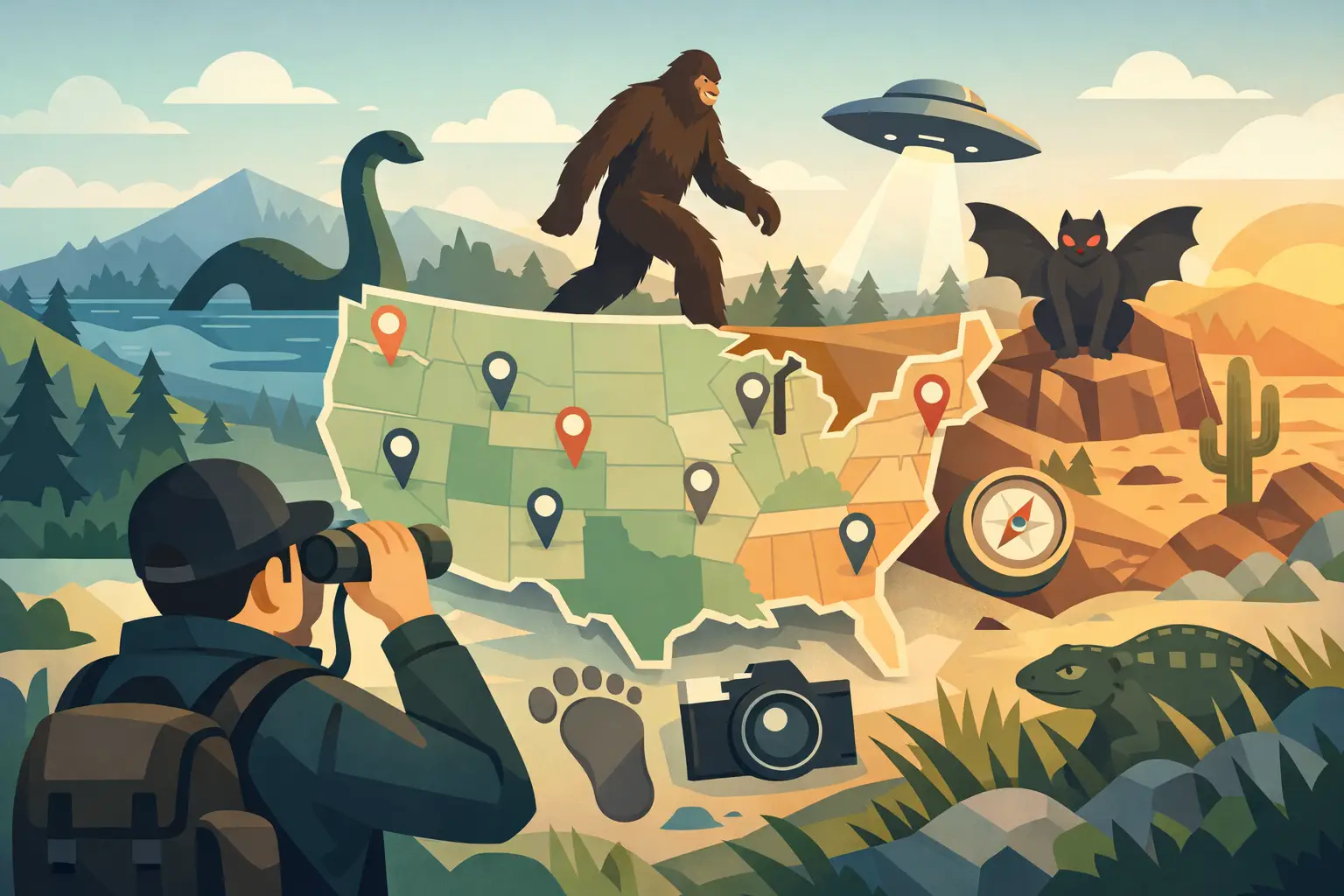
A good collection should feel less like a shelf full of stuff and more like a map with teeth. That is the real promise of a cryptid collector guide: not simply finding cool monsters, but building a personal cabinet of American legends. From swampy sightings to mountain omens, every creature carries a place, a story, and a little local weather with it.
The famous names are an easy doorway. Bigfoot, the Mothman, and the Jersey Devil have earned their spots in the folklore hall of fame. But America’s strange bestiary runs much deeper. The most memorable collection is often the one that makes a visitor stop, point at an unfamiliar beast, and ask, “What on earth is that?”
Start With a Collecting Story
Before you choose a figure, decide what your collection is trying to say. You do not need a museum budget or a room devoted to the paranormal. You need a point of view.
A state-by-state collection is one of the most satisfying ways to collect cryptids because it gives every addition a role. Each figure becomes a marker on a larger map: a legend from home, a creature found on a road trip, or a bizarre regional tale you could not believe was real until you found it. The goal is not to prove these creatures exist. The goal is to honor the fact that people kept telling their stories.
Some collectors begin with their home state. Others pick creatures tied to places they have visited, colleges they attended, or relatives who told them scary stories after dark. A completion collector may chase all 50 states from the start. None of these approaches is more legitimate than another. A collection with a clear personal rule is always more interesting than a pile assembled without one.
Choose Your North Star
Your north star can be simple: one legendary creature from every state. It can also be more specific. You might collect winged omens, lake monsters, forest dwellers, or beasts with especially odd origin stories. Maybe you want only figures with a vintage toy-art feel, or only creatures whose legends emerged before 1970.
The trade-off is focus versus freedom. A narrow theme creates a sharp, striking display, but it may make you pass up a creature you genuinely love. A 50-state mission leaves more room for discovery while giving your collection structure. If you are new to collecting, that broader map is a strong place to begin.
Learn the Legend Behind the Figure
A cryptid is not just a silhouette with claws. Its story matters. Regional folklore grows out of landscapes, industries, migration, anxieties, weather, and the weird details communities refuse to forget. A monster from coal country should not feel interchangeable with one born near a desert highway or a New England pond.
When you add a creature, learn a few details: where the legend comes from, when sightings or stories surged, and what makes the creature distinct. This does not require turning your hobby into homework. A small display card, a notebook, or a running digital list can preserve the tale without crowding the fun.
Be careful with the word “cryptid,” too. It is a useful umbrella, but American folklore includes more than alleged undiscovered animals. Some legends are ghostly, some are tricksters, some are cautionary tales, and some have roots in living cultural traditions. Treat every story with curiosity rather than flattening it into generic monster content.
That respect makes your shelf richer. A creature is more compelling when it still belongs to somewhere.
Build a Collection With Room to Grow
The fastest way to lose the joy of collecting is to buy everything at once, then realize none of it fits your space, budget, or taste. Let the collection grow like a campfire story: one strange detail at a time.
Set a pace that feels good. One new figure per month can turn the hunt into a ritual. A travel rule can make souvenirs more meaningful: bring home one local legend whenever you visit a new state. If you are working toward all 50, track your progress on a paper map or in a checklist. Seeing blank states waiting for their monsters creates a pleasing kind of itch.
Budget matters, especially with limited releases, older collectibles, and rare variants in the mix. Decide whether your collection is about pristine packaging, loose display pieces, special editions, or a combination. Mint-in-box collectors preserve an object’s retail-era history. Open-box collectors get to pose, photograph, and fully enjoy the sculpt. Neither is wrong. Just avoid paying premium prices for condition standards you do not personally care about.
For a collection meant to be displayed, visual consistency can be more important than chasing rarity. A shelf of figures connected by scale, color, or regional storytelling will usually land harder than a random row of expensive items.
The Cryptid Collector Guide to Displaying the Strange
Cryptids deserve better than a dark corner beside old game controllers. Your display does not need to be elaborate, but it should give each creature enough room to haunt the place properly.
Start by grouping figures in a way that tells a story. A U.S. map arrangement is the obvious and excellent choice for a 50-state collection. You can also build regions: Northeast night terrors, Southern swamp things, Great Lakes mysteries, desert wanderers, and Pacific Northwest giants. Regional groupings reveal patterns that a single straight line can hide.
Light is where caution enters. Direct sunlight can fade paint and yellow packaging over time, even if the room only gets a few bright afternoon hours. Keep figures away from windows where possible, and use gentle display lighting rather than hot bulbs pressed near plastic. Dust is less dramatic than a goat-headed monster, but it is persistent. A soft brush and regular attention will keep paint details visible.
If you keep packaging, store it upright and dry. Basements, attics, and garages can turn cardboard, adhesives, and paint into victims of moisture and temperature swings. Collectibles do best in a stable indoor environment. Protecting them is not about treating them like sacred artifacts. It is about making sure the weird little world you are building survives long enough to be enjoyed.
Make the Hunt Part of the Fun
The best collections are not only bought. They are found, traded, gifted, remembered, and occasionally rescued from the bottom shelf of a small-town antique store.
Keep a wish list, but leave room for surprise. A list prevents duplicate purchases and helps you notice which states or creature types are missing. Surprise keeps the hobby from becoming a spreadsheet. When you encounter an unfamiliar regional legend, give it a moment before you decide it is not for you. The obscure creatures are often the ones that become favorites.
Gift shoppers can use this same logic. Instead of reaching for the most famous monster, think about the recipient’s geography. Did they grow up in West Virginia? Have they moved away from the Gulf Coast? Do they speak fondly about a family cabin in the woods? A creature tied to a real place can feel more personal than another generic horror collectible.
Trading with other collectors can also help a state-by-state set take shape. Be clear about condition, packaging, and whether a figure is complete before making a swap. Take photos in good light. A little honesty keeps the community strange in the right ways.
Collect With Respect for the Roots
American folklore is not a single monster manual. It is a thousand local conversations, told across generations in diners, forests, porches, schoolyards, fishing boats, and roadside motels. Some stories are playful. Others carry real history, fear, or cultural significance.
That is why the strongest collector does more than chase the creepiest design. They pay attention to where a legend comes from and who has carried it forward. Avoid treating Indigenous, regional, or community-specific traditions as interchangeable spooky decorations. If a story has a deeper cultural context, let that context shape how you talk about and display it.
Fablins is built around that larger idea: 50 states, 50 legends, with every creature carrying a piece of the place that imagined it. The figure may be small, but the world behind it is not.
Leave one open space on your shelf. Not for a creature you have already planned, but for the legend you have not met yet. Somewhere between a familiar hometown monster and an impossible tale from a state you have never visited, your next favorite is waiting.