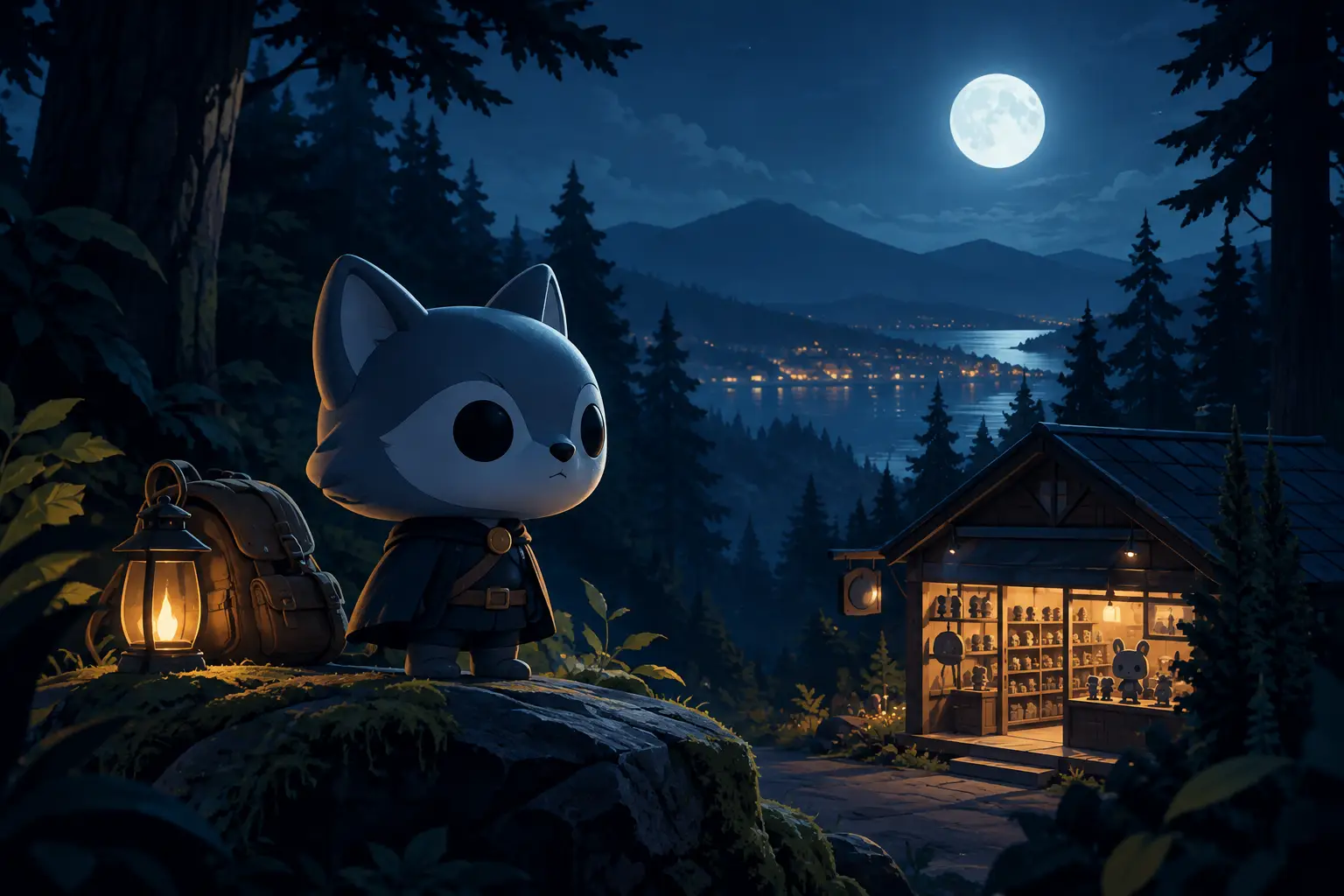
A shelf full of characters says something about its owner. Sometimes it says they love a certain movie, game, or decade. More and more, it says something closer to home: this creature comes from the woods near where I grew up. That shift is at the heart of the future of character collectibles. The next figures people treasure will not only be cute, rare, or tied to a massive franchise. They will carry a story, a place, and a reason to ask, “What on earth is that?”
For collectors, that is excellent news. America is already crawling with monsters. They lurk in lake-country rumors, desert road stories, mountain warnings, strange newspaper clippings, and the folklore passed between friends after dark. The real opportunity is not inventing a thousand interchangeable beasts. It is giving the creatures that haunt American folklore a body, a name, and a place on the shelf.
The Future of Character Collectibles Has a Sense of Place
For years, character collectibles have been dominated by familiar faces. That makes sense. Recognition is powerful. A beloved character comes with built-in emotion, instant display value, and a ready-made community of fellow fans.
But familiarity can flatten a collection. When every shelf holds the same handful of pop-culture icons, a figure becomes less of a discovery and more of a repeat broadcast. Collectors still want recognizable characters, but they also want pieces that feel found. A regional legend offers that feeling. It can be personal to someone from that state, fascinating to a traveler, and entirely new to the person seeing it for the first time.
Local identity gives a collectible a second life beyond its sculpt. Someone might bring home a figure because it represents Michigan, New Mexico, or the state where their grandparents told spooky stories. Another collector might build a map of creatures they encountered on road trips. A gift shopper can skip the generic monster and choose something that feels strangely specific to the recipient.
That does not mean every collectible needs a zip code. Plenty of great characters work because they are universal. The difference is that place gives a character roots. Roots make a figure harder to replace.
Stories Will Matter as Much as Sculpting
A great silhouette still stops people in their tracks. Strange horns, too many teeth, long limbs, a suspiciously cheerful grin - these things matter. Yet the figures with staying power offer more than visual noise. They suggest a world beyond the package.
The strongest character collectibles answer a few quiet questions: Where did this creature come from? What does it want? Why does it look like that? Who fears it, protects it, or swears they saw it at the edge of the trees?
Folklore is especially suited to this kind of character building because it arrives with texture. A legend may have changed over generations. It may be funny in one town and frightening in the next. It may have roots in real landscapes, local anxieties, immigrant traditions, Indigenous stories, labor history, weather, or the simple human instinct to explain an unexplained sound in the dark.
That depth should be handled with care. Turning folklore into a collectible does not mean treating every old tale as raw material to strip for parts. The best work keeps the regional identity visible. It recognizes that legends belong to communities, and that some stories call for more research, more context, and more restraint than others.
Collectors notice the difference. They can tell when a character has been designed from a real story and when it has been dressed in a few spooky clichés. One becomes a conversation starter. The other becomes shelf filler.
Completion Collecting Needs a Bigger Reason
Collecting a full set has always had a particular magic. One figure is fun. Ten figures look intentional. A complete series feels like a small kingdom assembled piece by piece.
The future belongs to collections with a framework strong enough to make completion feel meaningful. A color variant alone rarely creates that feeling for long. A connected world does. So does a clear mission, a geographic challenge, or a cast of characters that reveals a larger picture as it grows.
“50 states. 50 legends.” is a powerful example of the kind of promise collectors can understand immediately. Each new creature is satisfying on its own, but it also fills a specific space in a larger American monster map. That turns collecting into a journey. There is always another state, another sighting, another strange tale waiting past the next border.
This is why planned waves can be more exciting than a constant flood of releases. A wave gives fans time to meet the characters, choose favorites, and anticipate what is coming next. It creates room for speculation without making the collection feel impossible to catch up with.
The balance matters. If releases arrive too slowly, attention can drift. If they arrive too fast, the fun starts to feel like homework. The best collectible lines build momentum while respecting a collector’s budget, shelf space, and patience.
Mystery Is Better When It Feels Fair
Surprise has a place in monster culture. A sealed package, an unknown sighting, and a rare creature can all add a little electricity. But the future of character collectibles will be shaped by clearer choices, not just more gambling mechanics.
Many collectors want to know which character they are buying. They are curating a display, hunting for their home-state legend, or picking a gift for someone who loves moths, swamp monsters, or oddball Americana. A figure should not have to hide in a blind box to be exciting.
Rarity can still work when it supports the story rather than punishing the audience. A limited seasonal colorway, an event-exclusive accessory, or a special edition tied to a genuine legend can feel earned. Making a core character nearly impossible to find is different. It turns a shared world into a locked gate.
Transparency will become a collectible virtue. Fans want to know what is planned, what is limited, what is returning, and what is truly gone. They do not need every secret revealed. A little mist around the forest is good. A map with no trail markers is not.
The Physical Object Is the Point
Screens can introduce characters quickly, but they cannot replace the small, solid pleasure of a figure in your hand. A collectible has weight. It catches light. It changes the mood of a desk, a bookshelf, or a crowded cabinet of strange treasures.
That physical presence is part of why designer toys and character figures keep their pull even as entertainment becomes more digital. The object is proof that a story escaped the screen and entered the room. It becomes a ritual: unboxing, arranging, photographing, moving a favorite creature closer to the front of the shelf.
The details matter here. Strong materials, expressive sculpting, careful paint applications, packaging worth keeping, and a scale that makes figures feel like they belong together all build trust over time. Bigger is not automatically better, and neither is more complicated. A compact figure with a memorable pose can become a favorite because it fits naturally into real life.
Sustainability will matter too, though there are trade-offs. Collectors often value premium packaging and pristine condition, while excessive plastic and disposable layers can make a special item feel wasteful. The brands that earn loyalty will find ways to protect the figure and preserve the experience without burying a small creature in a mountain of trash.
Collectors Want Worlds They Can Help Keep Alive
The most durable character lines are not finished when the figure ships. They grow through displays, photos, fan theories, state pride, trading stories, and the friendly argument over which creature is the most unsettling.
A good collectible gives people something to gather around without demanding that everyone participate the same way. One fan may chase every release. Another may only collect creatures from places they have lived. Someone else may buy a single weird little legend because it makes the perfect birthday gift. All three belong in the world.
That openness is especially valuable for folklore-based characters. The audience is not limited to toy collectors. It includes horror fans, local-history nerds, paranormal podcast listeners, travelers, tabletop players, and anyone who has ever slowed down at a roadside sign promising a mystery just ahead.
Fablins is built for that kind of gathering: a growing cast of America’s legendary creatures, each one tied to a particular corner of the map. The point is not to make folklore feel like homework. It is to make the strange stories people inherit, overhear, and remember feel alive enough to bring home.
The next great collectible may not arrive with the loudest franchise or the most elaborate chase ratio. It may be the creature that gives someone a new way to talk about where they are from. Make room on the shelf. America still has monsters left to meet.