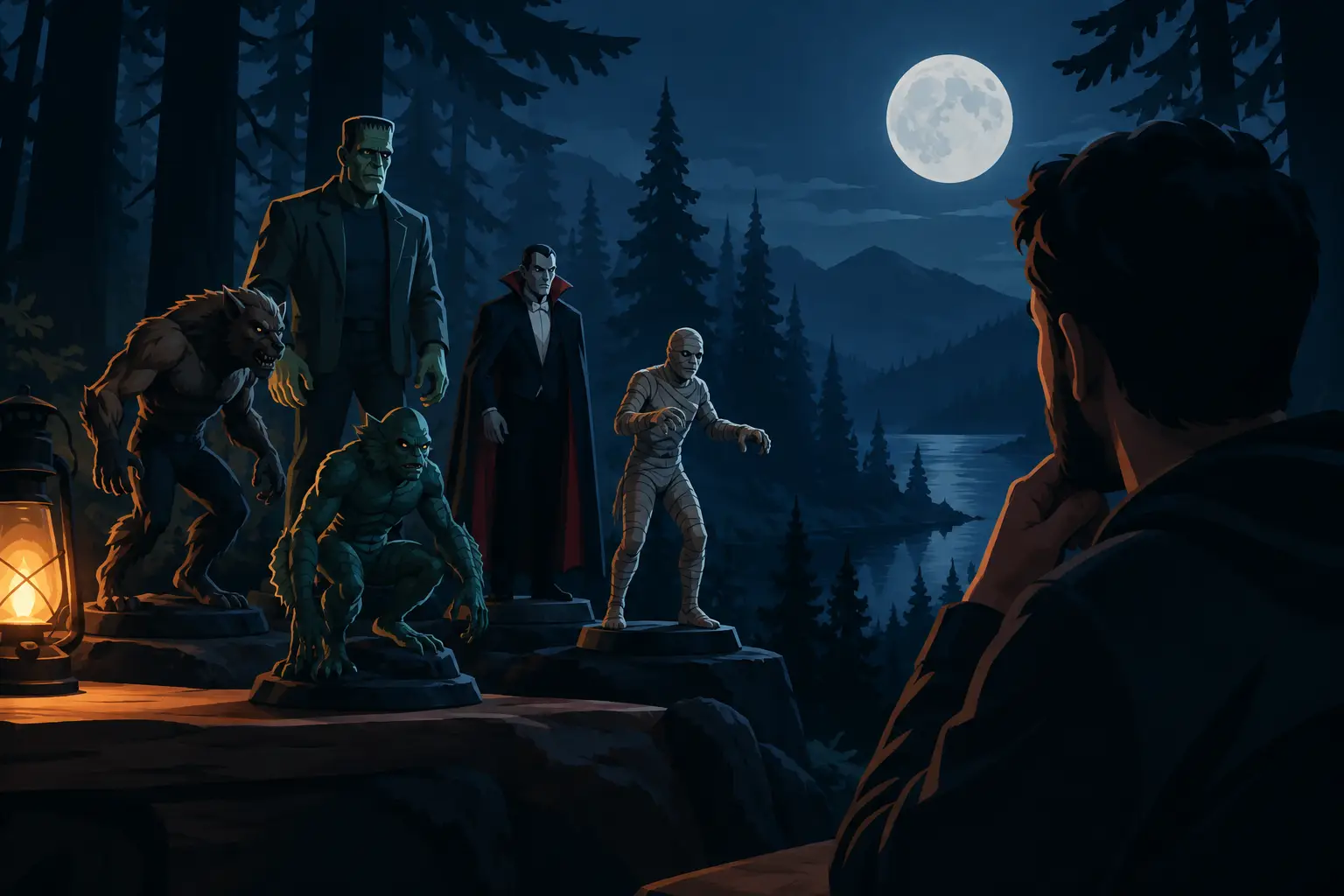
A dusty creature on a shelf can be worth pocket change, a few hundred dollars, or far more than anyone expected. So, are monster figures valuable? Sometimes. But the price tag is only part of the story. The figures collectors hold onto tend to carry something harder to measure: a vivid character, a place in a beloved series, and a legend people want to keep close.
Monster figures sit at a fascinating crossroads. They can be toys, art objects, horror memorabilia, nostalgic artifacts, and tiny ambassadors from worlds we wish were real. A creature with a strange silhouette might catch someone’s eye. A creature with roots in a hometown legend can become part of their identity.
Are Monster Figures Valuable Beyond Their Price?
Value has two faces in collecting. The first is market value: what a buyer is willing to pay right now. The second is collector value: the personal pull that makes a figure earn permanent shelf space, even when resale prices rise and fall.
A rare vintage monster toy in its original packaging may command a strong price because supply is low and condition is exceptional. But rarity alone does not create a lasting collectible. If few people recognize the character, care about the line, or want to complete the set, scarcity can become a lonely thing.
The most durable value comes from the meeting of scarcity and desire. Collectors need a reason to hunt. That reason may be a childhood memory, a striking design, a cult film, a favorite local monster story, or the satisfaction of finding the one creature missing from a display.
That is why a figure can matter deeply before it becomes expensive. A newly released character may have little established aftermarket history, yet still have real collecting potential if it belongs to a coherent world people want to follow. Price is a snapshot. Cultural attachment is the longer haunting.
What Makes a Monster Figure Worth Collecting?
There is no cursed formula that guarantees every monster figure will grow in value. Even famous brands have releases that stay common, while unexpected oddballs become collector favorites years later. Still, a few forces tend to shape what lasts.
Character and story create demand
A figure is easier to remember when it represents more than a generic beast. Does it have a name, a place, a rumor, or a strange little history? The answer matters.
Folklore-based creatures have an advantage here. They arrive with built-in atmosphere. A regional legend carries the woods, highways, swamps, lakes, and late-night campfire stories that made it famous. That context gives collectors a reason to talk about the figure, show it to friends, and seek out the next creature from another corner of the map.
A monster does not need to be universally famous to be meaningful. In fact, the overlooked ones often make the best conversation starters. The creature that haunted stories in your state, or the one you encountered while traveling, can feel more personal than another version of a monster everyone already knows.
Design matters more than trend-chasing
A great sculpt can stop someone in their tracks. Strong silhouettes, expressive faces, unusual textures, and thoughtful color choices give a figure presence from across the room. When a collection has a recognizable visual language, each new creature feels related without becoming repetitive.
Trend-driven designs can sell fast, but a distinct character has a better chance of aging well. Collectors often return to pieces that feel specific rather than interchangeable. The question is not simply, “Is this popular right now?” It is, “Will this still look strange, wonderful, and unmistakable on a shelf five years from now?”
Rarity helps, but manufactured scarcity has limits
Limited production runs, discontinued releases, convention exclusives, and early editions can all affect resale value. Fewer available figures can mean more competition among buyers. Yet a limited edition is not automatically valuable just because it is numbered or difficult to find.
Collectors can tell when scarcity serves the character and when it is merely a gate. A special version with meaningful details, a seasonal colorway, or a release tied to a genuine moment in a line’s history can feel worth pursuing. Too many variants, too quickly, can exhaust the very people a collection hopes to inspire.
The strongest collections balance access with discovery. There should be room for a new collector to begin, and room for the devoted collector to chase something unusual.
Condition protects market value
Condition is where sentiment meets reality. A figure with its original box, inserts, accessories, and clean paint usually appeals to more buyers than a loose, damaged example. For older figures especially, complete packaging can change the price dramatically.
That does not mean every figure belongs behind museum glass. Many collectors open their figures because the display experience is the point. That is a perfectly good choice. Just know the trade-off: opening, sun exposure, smoke, dust, bent packaging, missing parts, and paint wear can narrow future resale appeal.
If preserving value matters to you, keep boxes dry and out of direct sunlight, retain every accessory, and avoid stacking heavy items on packaging. If joy matters more, display the creature proudly. A collection is not failing because it looks lived with.
The Power of a Complete Set
Individual figures can be wonderful. A collection can become a quest.
Completion collecting is one of the strongest engines in the figure world. When characters are organized into waves, regions, teams, or a larger story, each release gives the others more meaning. One creature is a cool find. Ten creatures that map a strange little universe create momentum.
The promise of one legend from every state is especially powerful because it makes collecting feel like traveling through American folklore. You are not just acquiring objects. You are assembling a cabinet of roadside mysteries, mountain rumors, swamp shadows, and creatures whispered about far from the usual monster spotlight.
Fablins approaches that idea with a clear invitation: 50 states, 50 legends. For collectors, that framework creates a reason to come back. You might start with your home state, then grab the creature from a place you once visited, then realize you have accidentally begun building a national cryptid menagerie.
A complete or near-complete set can also become more desirable on the resale market, particularly when earlier releases are hard to locate. But collectors should never assume completion guarantees profit. The real reward is the story the display tells when all those creatures finally stand together.
How to Buy With Both Heart and Sense
The best way to collect monster figures is to separate hope from certainty. Buy what you genuinely want to own, not what someone claims will pay for your retirement. Markets change. Tastes change. A hot release can cool off, and an overlooked figure can suddenly find its people.
Before buying, consider four practical questions:
- Does this figure have a design or story I will still enjoy if its resale price never changes?
- Is the maker building a consistent line with characters worth following?
- Is the edition size, release format, and condition clear?
- Can I afford it without turning a fun hunt into a financial burden?
These questions protect the joy of collecting. They also help you recognize the difference between a meaningful release and a purchase driven by fear of missing out.
For resale-minded collectors, patience is useful. Check actual completed sales rather than optimistic asking prices. Compare condition carefully. A sealed figure, an opened but complete figure, and one missing a key accessory are not the same item, even if the character is identical. Remember that shipping costs, seller fees, and time spent finding a buyer all reduce a headline sale price.
The Legends That Stay
Monster figures become valuable when they give people something worth returning to. It may be nostalgia. It may be rarity. It may be a beautifully strange sculpt that makes a room feel less ordinary. Often, it is the feeling that a small creature has carried a piece of a much larger legend home.
Treat market value as a possibility, not a promise. Choose the monsters whose stories make you look twice, whose designs make your shelf feel alive, and whose missing companions make the hunt more fun. The best collectible is the one you would be glad to find waiting for you, even if no one ever offered to buy it.