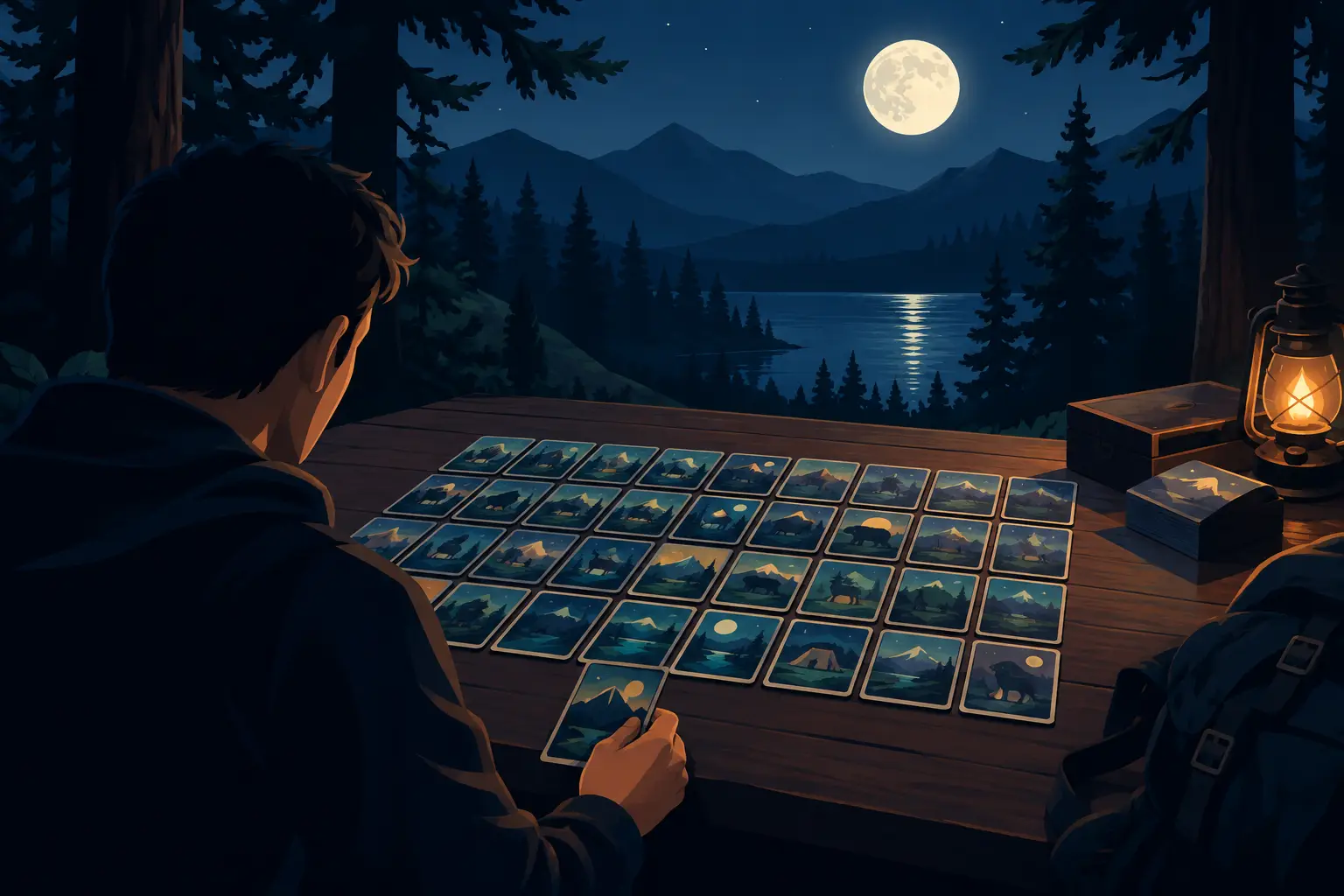
A lone creature figure can start a conversation. A full shelf of them tells a story about the country itself: shadowy woods, roadside warnings, old lake tales, and the monsters locals swear are still out there. Why do collectors complete sets? Because finishing a collection turns individual objects into a world they can see, arrange, revisit, and proudly claim as their own.
For collectors, the final piece is rarely just another item. It is the missing state, the last strange face in the lineup, the creature that makes the whole map feel alive. That feeling is powerful because collecting is not only about having things. It is about making meaning from them.
Why Do Collectors Complete Sets?
The simplest answer is that people like resolution. An incomplete set creates a tiny, persistent tension. You can see what is there, but you can also see what is absent. The missing piece becomes a question mark on the shelf: What is the story behind it? When will it join the rest? Will the collection ever feel finished?
Completion answers that question with a satisfying click. Every character has a place. Every gap is gone. The collection becomes a complete statement rather than a work in progress.
That does not mean every collector chases every release. Some people collect only creatures from places they have lived, visited, or loved. Others build around a favorite region, a certain monster type, or the figures that look best in their display. But a clearly planned series gives people a choice. They can enjoy one legendary creature on its own, or they can pursue the bigger story piece by piece.
A 50-state collection makes that story especially clear. Each state is a chapter. Each creature is a local witness to the weird, wonderful folklore that has lingered there for generations. Together, they are not fifty random monsters. They are an illustrated, three-dimensional folklore atlas.
A Set Gives Every Figure a Bigger Job
A great collectible character should stand on its own. Its silhouette, expression, colors, and lore should make someone want it even if they never buy another figure. Yet sets create a second kind of value: context.
Put one regional legend on a desk and it is a charming little menace. Put it beside creatures from other states and it becomes part of a roaming cast of American oddities. The figure is no longer only about its own tale. It helps reveal the range of stories Americans tell about dark forests, strange visitors, cursed roads, forgotten mines, and waters that do not give up their secrets.
That context encourages collectors to look closer. A person may start with their home-state creature, then notice a figure tied to a road trip, a grandparent's hometown, or a legend they heard on a late-night paranormal podcast. The set gives curiosity somewhere to go.
This is why regional identity matters so much in collecting. A creature tied to a real place feels personal in a way a generic monster often cannot. It can carry hometown pride, travel memories, family stories, or the pleasure of learning that a supposedly quiet corner of the map has its own beast in the shadows.
The Hunt Is Part of the Reward
There is a small burst of joy in finding the next figure you have been waiting for. Planned releases stretch that feeling over time. Instead of buying everything in one afternoon and moving on, collectors get to anticipate the next sighting, make room on the shelf, and decide which legend they hope appears next.
That rhythm matters. A collection grows alongside its owner. The first figure marks the beginning. The tenth makes the idea feel real. Somewhere in the middle, the display starts looking less like a handful of purchases and more like a gathering. By the final figure, the collector can see the path they took to get there.
The best collecting journeys have just enough structure to make progress visible, without making the experience feel like homework. A numbered series, a state-by-state premise, and recognizable release waves give the hunt a shape. They let collectors track what they have, what is still abroad in the wild, and what future creature may join the ranks.
There is a trade-off, of course. A completion goal can become expensive or stressful if it feels urgent, confusing, or impossible to manage. That is why transparent collections tend to earn more affection than artificial scarcity games. When collectors understand the scope of a series and can follow its path, completion feels like an invitation, not a trap.
Fablins is built around that invitation: 50 states, 50 legends, with creatures arriving in waves rather than hidden behind a blind-box gamble. The surprise lives in the folklore and the character design, while collectors can choose their own route through America’s legendary creatures.
Completion Makes a Display Feel Intentional
Collectors do not only acquire figures. They curate a space. A shelf, bookcase, desk, cabinet, or wall display becomes a little stage for the things they care about. Complete sets are especially satisfying because they bring visual order to that stage.
Repeated scales, shared design language, and connected packaging can make very different characters feel like they belong together. That unity gives collectors room to get creative. They might arrange figures by statehood order, region, color, creature type, or pure supernatural chaos. A Pacific Northwest beast can stand beside a swamp-dwelling terror and a desert oddity, and the contrast makes each one more memorable.
There is also a quiet social pleasure in a completed display. Guests ask questions. They point to a creature they recognize, then learn about three they have never heard of. The collection becomes a conversation starter that says something more interesting than "I like monsters." It says, "I like the strange stories this country keeps telling."
For gift shoppers, that larger framework is useful too. One figure can be a thoughtful present tied to a recipient's home state or favorite legend. A set gives future gifts a clear direction. Birthdays, holidays, and small surprises no longer require guessing. There is always another state to visit, another creature to bring home.
The Last Figure Feels Different
When someone finally completes a set, the thrill is not always about rarity or cost. Often, it is about closure. The final figure proves that the vision they saw at the beginning is now real in physical form.
That moment also changes the collection's emotional weight. Individual pieces may recall when they were found, who gave them, or why they mattered. The completed set holds all of those small moments at once. It becomes a record of patience, taste, and curiosity.
Still, completion does not have to mean stopping. A finished collection can be the foundation for a new display, a deeper reading list, a different scale, or a new branch of the same creature universe. The shelf may be complete, but folklore is not. Stories keep moving between campfires, back roads, family kitchens, and the corners of the internet where someone is always ready to insist they saw something impossible.
If you are building a collection, start with the creature that already has its claws in your imagination. Let your home state call to you, follow a legend from a memorable trip, or choose the weirdest thing on the shelf. The rest of the map can wait in the mist. A complete set begins with one story you want to bring home.