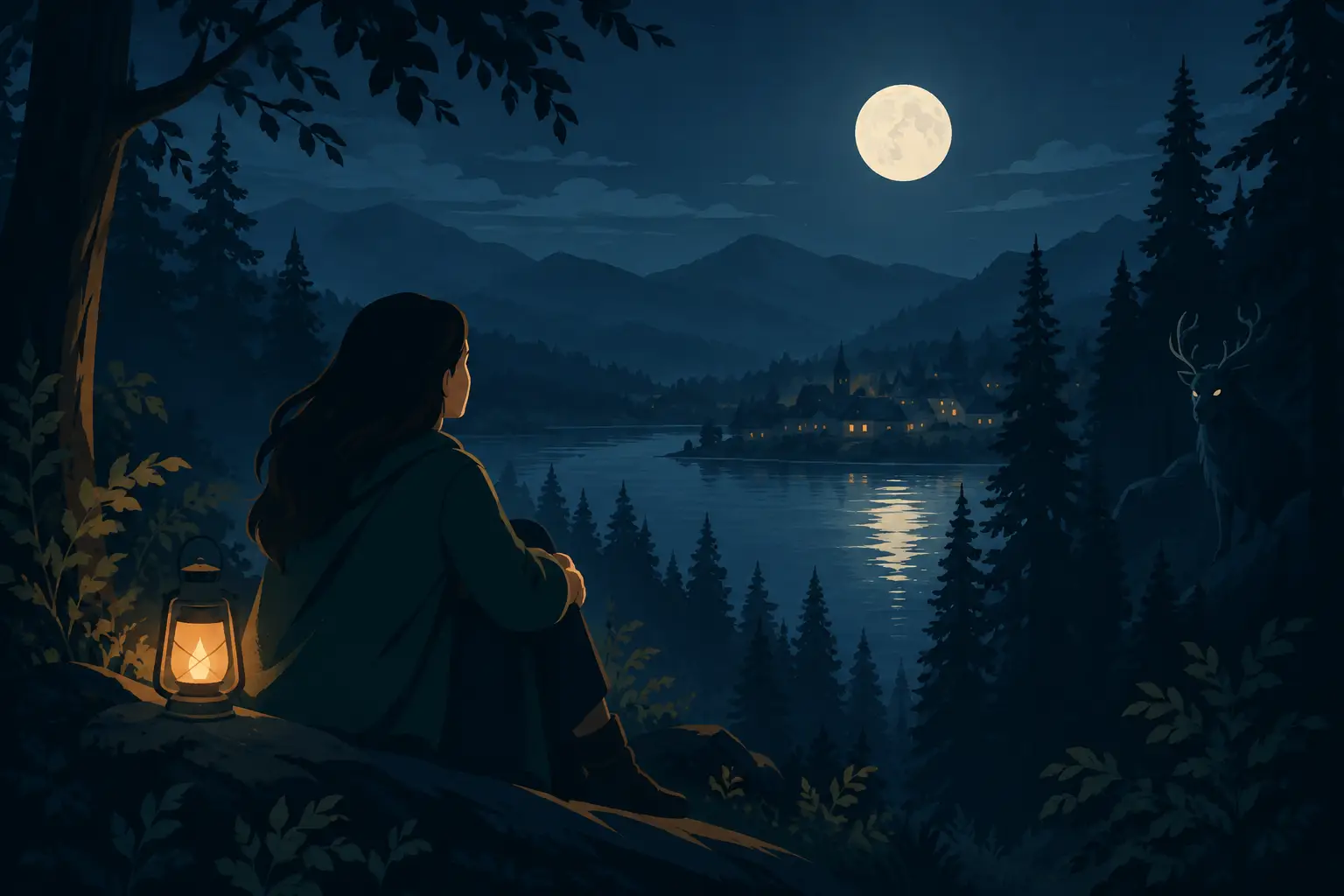
A strange creature is never just a strange creature when it comes from home. It is the thing your uncle swore he saw near the creek, the warning attached to a lonely road, the local story that somehow never made it into a school textbook. That is why regional folklore revival feels bigger than a trend. It is America remembering that every state has its own shadows.
For years, the national cryptid conversation has revolved around a small handful of famous names. Bigfoot gets the documentaries. Mothman gets the murals. The Jersey Devil gets the headlines. They deserve their place in the monster hall of fame, but they are only part of the map. Beyond them are river-haunting serpents, wild-eyed forest visitors, phantom hitchhikers, cave creatures, witch legends, and things that may or may not be waiting just beyond the porch light.
A regional folklore revival gives those stories room to breathe again. It asks a better question than, “Is this creature real?” It asks, “Why did this creature matter here?”
Why Regional Folklore Revival Is Growing
Local legends carry an ingredient that generic horror cannot fake: place. A story born in the Appalachian hills does not feel the same as one shaped by the Great Lakes, high desert, swamp country, or a wind-beaten New England coast. The landscape is part of the creature. So are the people who told the story first.
That connection has become more valuable as so much culture gets flattened into the same feed, the same franchises, and the same familiar characters. People are looking for the odd details that make a hometown feel like a hometown. A local monster can do that in a single image. It gives a place a secret identity.
There is nostalgia in it, but not only nostalgia. Younger fans are discovering folklore through podcasts, horror games, art toys, roadside attractions, family stories, and late-night searches for the weirdest legend in their state. They are not simply preserving the past. They are remixing it, arguing over it, illustrating it, and carrying it into new forms.
That matters because folklore was never meant to sit still. It changes with every retelling. A creature might begin as a warning against wandering into dangerous woods, then become a campfire thrill, then a newspaper curiosity, then a symbol on a local T-shirt. The core story survives because each generation finds a new reason to keep telling it.
The Monster Belongs to the Map
The strongest regional legends are specific. They have a road name, a lake, a county, a season, or a particular stretch of forest attached to them. Remove that setting and the story may still be spooky, but it loses some of its electricity.
Think of how differently America imagines danger from region to region. In one place, the threat comes from deep water and fog. In another, it comes from abandoned mines, endless cornfields, or a treeline that goes quiet too fast. These are not interchangeable backdrops. They are clues to what a community has feared, respected, and lived alongside.
Folklore can also preserve the emotional weather of a place. A legend might contain old anxieties about isolation, changing industry, harsh winters, unfamiliar newcomers, or land that refuses to be controlled. It may be funny, grim, protective, or deeply unsettling. Often, it is all of those at once.
That is why a state-by-state approach feels so satisfying to collectors. It turns a shelf into a map of American weirdness. One figure represents more than a design. It can point back to a hometown, a road trip, a relative’s favorite story, or a patch of woods somebody still refuses to enter after dark.
From Campfire Story to Collectible Creature
Turning folklore into art, apparel, books, or collectible figures can seem like a big leap from the original campfire tale. Done carelessly, it can sand away the strange parts until every creature becomes the same generic monster with a different label. Done well, it gives overlooked legends another life.
The trick is respect. A creature’s design should carry traces of its origin: its habitat, its behavior, its local mood, and the details that make people from that region say, “Yes, that feels right.” The goal is not to trap folklore in a glass case. It is to make someone curious enough to ask where the story came from.
That curiosity is powerful. A collectible can become a conversation starter, especially when it represents a legend no one at the table has heard before. The best response is not, “I know that monster.” It is, “Wait, what is the story behind that one?”
Fablins is built around that question, with one legendary creature for every state. The point is not to declare a final, official version of every legend. Folklore rarely works that way. The point is to invite people into a bigger American creature universe, one where the famous monsters share space with the regional oddities that deserve a second sighting.
Revival Does Not Mean Rewriting the Past
Not every old story should be repeated without context. Some legends contain stereotypes, painful history, or borrowed traditions that have been distorted over time. Regional folklore revival is most meaningful when it does more than recycle spooky names. It should encourage people to learn whose story it is, how it changed, and what deserves care.
This is especially true when folklore intersects with Indigenous traditions, immigrant communities, or living cultural practices. A creature is not automatically public domain just because someone heard a version online. The responsible move is to distinguish between broad local lore, documented history, and stories that belong to particular communities.
That does not make folklore less fun. It makes it more interesting. Mystery gets deeper when we stop treating every legend as a trivia card. A monster can be playful and collectible while still carrying real regional roots.
There is another trade-off, too. Once a local legend becomes popular, some people worry it will lose its underground charm. That can happen. But obscurity is not the same as protection. A thoughtful revival can help stories endure, provided the people closest to them are not erased from the picture.
How to Join the Revival Without Losing the Weirdness
Start close to home. Look up the stories tied to your county, your grandparents’ town, the place you vacationed as a kid, or the route you take after midnight. Pay attention to details that sound too specific to be invented by a content farm: the bridge, the quarry, the year, the strange rule everyone knows.
Then compare versions. Folklore is allowed to disagree with itself. One witness says the creature had wings. Another says it was a dog. A third insists it was just a neighbor in a coat. Those contradictions are part of the fun. They show that the legend has been alive long enough to collect fingerprints.
If you collect monster art or figures, choose pieces that make you want to learn more, not just fill a gap. Build a display around places, stories, and personal connections. A creature from your home state can sit beside one from a favorite road trip or a legend that matches your own taste for swamp monsters, haunted highways, or things with too many teeth.
America’s folklore is not hidden in one forgotten book. It is scattered across diners, trailheads, local archives, family kitchens, and the back roads people warn you not to take. Pick one legend from your corner of the map, ask who kept it alive, and give its creature a place in your imagination.