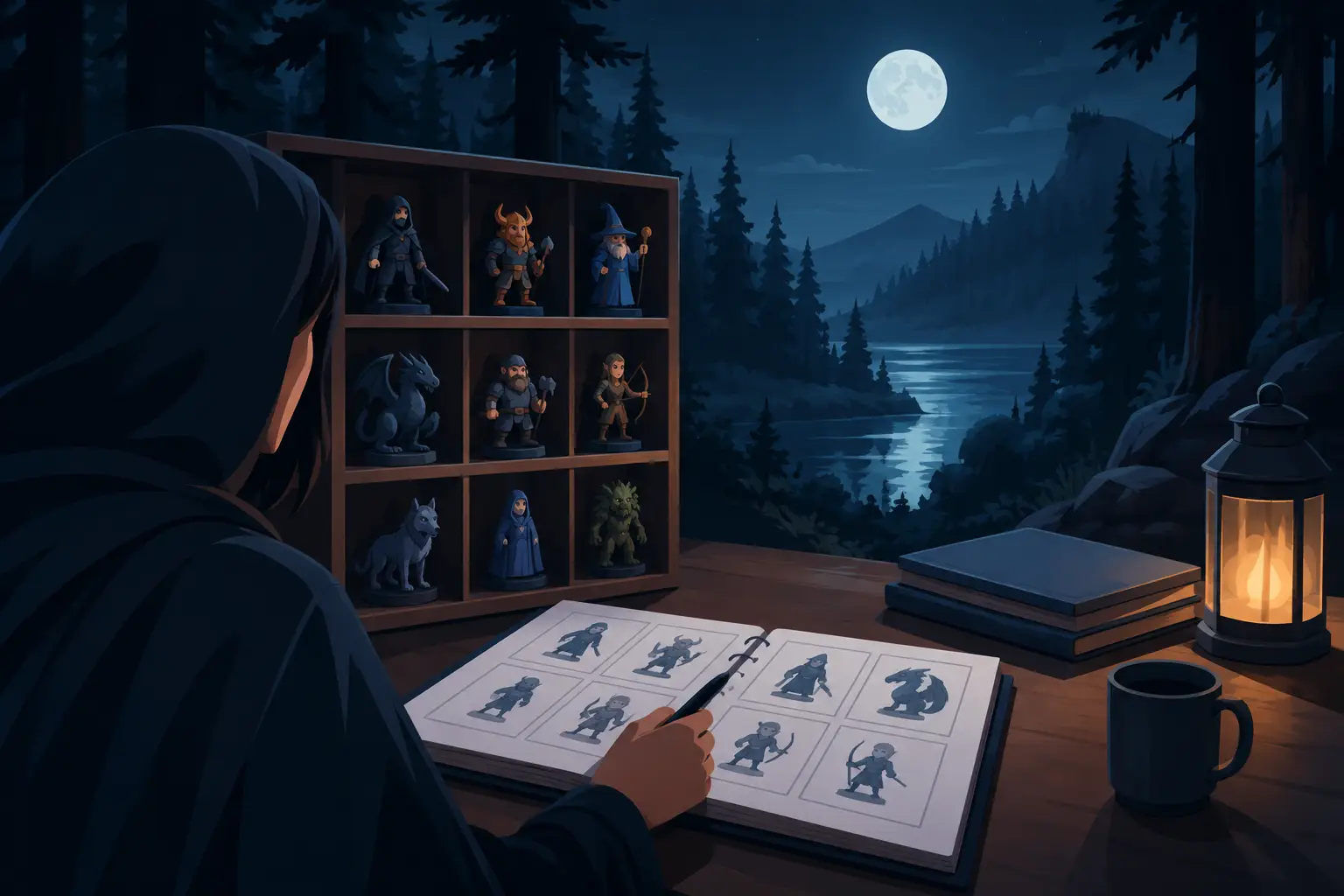
A figure collection can start with one strange little creature on a shelf and, before long, become its own map of obsessions: swamp things, roadside horrors, local legends, and monsters with stories worth retelling. Learning how to catalog figure collections gives that growing horde a shape. It helps you remember what you own, protect what matters, and spot the empty places where another legend belongs.
For cryptid and folklore collectors, a catalog should do more than count boxes. It should preserve the story behind every creature. A figure from the Pacific Northwest is not just green vinyl or painted resin. It is a resident of a particular landscape, a piece of regional imagination, and perhaps the next stop on your hunt for all 50 states.
Start With the Story, Not the Spreadsheet
The best cataloging system is one you will actually keep using. That means starting with a question more interesting than “What do I own?” Ask: “What kind of collection am I building?”
Maybe you want one figure from every American state. Maybe you collect only lake monsters, winged omens, or creatures tied to places you have visited. Maybe your shelf is a beautifully unruly gathering of folk monsters, horror icons, and weird roadside souvenirs. There is no wrong answer, but your answer determines what details your catalog needs to capture.
A state-by-state collection benefits from geographic fields. A character-focused collection may need information on releases, variants, and artists. A display-first collector might care most about size, color, and where each figure lives in the room. Start with the collecting story, then build the records to match it.
Give your collection a simple mission statement. Something like: “American legendary creatures, organized by home state,” or “Folklore figures that feel like they escaped a campfire story.” It sounds dramatic because it should be. A collection with a clear point of view is easier to grow without turning into a pile of forgotten purchases.
How to Catalog Figure Collections: Choose Your Home Base
You only need one central record. For many collectors, a spreadsheet is the right first lair: flexible, searchable, easy to sort, and free of unnecessary ceremony. Use columns and filters to view your collection by state, creature type, release wave, or status.
A notes app can work for a smaller collection, especially if you prefer writing short lore entries beside your inventory details. A dedicated collection app may be useful if you own hundreds of figures and want quick photo uploads, barcode scanning, or insurance-style reporting. The trade-off is control. Apps can change or disappear, while a basic spreadsheet remains yours.
Paper catalogs have their own magic. A field-journal-style notebook makes a great companion to a digital master list, particularly for folklore collections. Sketch a creature, record where you found the figure, or write the local tale that made you want it. Just do not rely on one handwritten notebook as your only inventory if replacement value matters.
Whatever you choose, keep the system easy to update from your phone or computer. A catalog that requires a ritual every time a new figure arrives will quickly become haunted by missing entries.
Record the Details That Matter Later
Every figure deserves a basic identity card. Begin with the figure or character name, the brand or line, the creature’s associated state or region, and the release year or wave. Add the date you acquired it and what you paid if you want to track spending or insure the collection.
Then record condition. Is it sealed, displayed, loose but complete, or missing an accessory? Is the original packaging present? For collectible figures, the box may be part of the artifact, especially for limited runs or releases with lore printed on the package. Be honest and specific. “Excellent” means less than “displayed behind glass, no visible paint wear, box stored flat.”
Photos are worth the few extra minutes. Take one clean front photo, one back photo, and a shot of the packaging or accessories when relevant. Use the same background and lighting when possible. Your catalog becomes far easier to browse, and the images are useful if a figure is damaged, misplaced, or stolen.
For folklore figures, add a lore field. Keep it brief: creature name, region, and a sentence about the legend. This is where the collection becomes more than inventory. You are building a cabinet of American strange, not conducting a warehouse count.
A useful core record might include:
- Figure and creature name
- State, region, or legend of origin
- Brand, line, wave, and release year
- Edition or variant details
- Condition, packaging, and accessories
- Purchase date, source, and price
- Display location and photos
- A short note on the creature’s folklore
Not every figure needs every field. A vintage flea-market find may have no known release year. A gift may have no purchase price. Mark unknown details clearly rather than guessing. Mystery belongs in the legend, not in the records.
Give Every Shelf a Location Code
Once a collection spreads beyond one display, memory becomes unreliable. The little river monster you swear was on the second shelf may be in a storage tote beneath winter decorations. A location code solves that problem without making your home feel like a museum archive.
Name display areas in plain language: “Office bookcase, shelf 3,” “Living room cabinet, top left,” or “Closet tote B.” Add that location to each catalog entry. If you rotate displays seasonally, update the code when a figure moves.
This is especially useful for collectors building a 50-state display. You may organize geographically, with neighboring states sharing a shelf, or arrange by habitat: woods, desert, mountains, waterways, and night skies. Either way, your catalog can tell you exactly which creatures are currently hiding in storage.
There is a trade-off between a perfectly themed display and a collection that is easy to expand. Alphabetical order makes additions simple. Regional order tells a stronger story. Grouping by color can look fantastic but may bury a state’s identity. Choose the system that makes you want to look at the shelf, not merely maintain it.
Track Missing States and Unfinished Sightings
Completion collecting is one of the great pleasures of a unified figure line. A checklist turns the hunt into a living expedition. For a state-based folklore collection, create a separate tab or section with all 50 states and mark each as collected, announced, wanted, or not yet represented.
Do not confuse “not yet released” with “missing from my collection.” Those are different beasts. A figure you have not purchased is a personal gap. A creature that has not been announced is part of the larger mystery. Keeping both statuses visible prevents duplicate buying and makes future release waves easier to follow.
You can also create a wish list for legends outside your main set. Perhaps you want a creature from your home state, a monster from a road trip, or an obscure tale your grandparents used to mention. Fablins collectors can use this approach to track first and second sightings while keeping a clear view of the states already claimed by America’s Legendary Creatures.
Make Room for Provenance and Personal History
The most valuable detail in your catalog may not be market value. It may be where the figure came from. Write down whether it was a birthday gift, a convention find, a reward after a hard week, or a souvenir from the state that inspired the legend.
Those notes give your collection a memory. Years from now, you may forget the exact price of a figure, but not that you found it during a thunderstorm in a tiny shop outside town. A catalog can hold the practical facts and the campfire-story facts at the same time.
Set a recurring reminder to update your records every month or after each new release. Photograph arrivals before they disappear into the display. Review condition once or twice a year, particularly for figures near sunlight, heat, pets, or eager younger relatives.
A well-kept catalog does not make collecting less magical. It lets you see the shape of the strange world you are building, one state, one legend, and one watchful creature at a time.