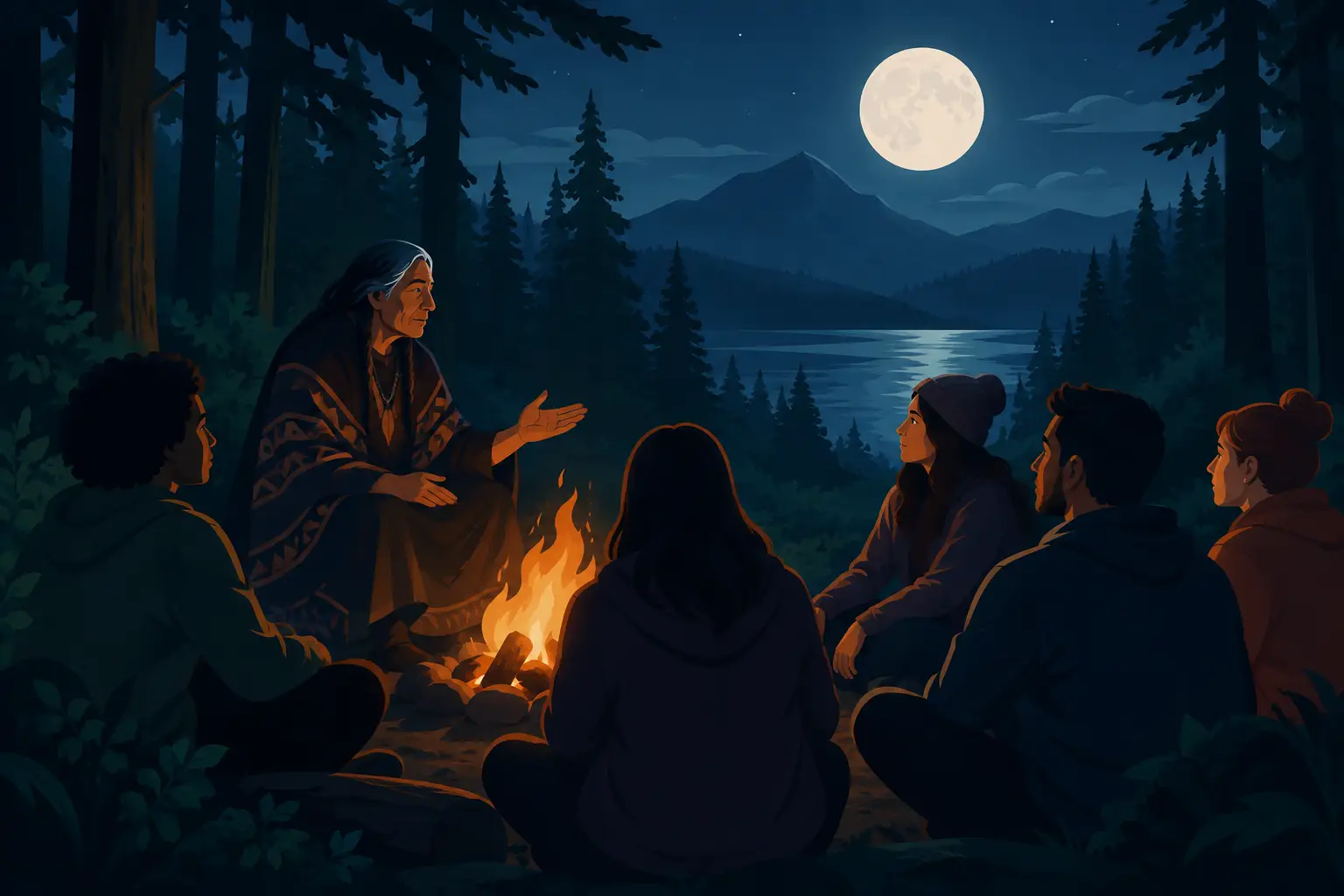
A monster is never just a monster. It may be a warning whispered near a river, a name for the fear of getting lost in the woods, a joke shared by a town, or a story carried through generations by people who are still here. That is what makes lore culturally respectful: treating a legend as more than raw material for a cool creature design.
For collectors, writers, artists, and fans of America’s legendary creatures, respect does not mean making folklore stiff or untouchable. It means recognizing that every tale came from somewhere. A regional monster should still feel like it belongs to its region - its landscape, its history, and the people who gave it a name.
What Makes Lore Culturally Respectful?
Culturally respectful lore begins with a simple shift in perspective. Instead of asking, “How can we use this story?” ask, “Who does this story belong to, what does it mean where it comes from, and what responsibilities come with retelling it?”
Some legends are wide-open local folklore. They have passed through newspaper clippings, campfire stories, roadside attractions, and decades of playful reinvention. Others are connected to specific Indigenous nations, religious traditions, immigrant communities, or living families. Those stories do not all call for the same approach.
Respect is not a single permission slip. It is judgment, research, and restraint. Sometimes the right move is to tell a story with care. Sometimes it is to change the angle. Sometimes it is to leave a story alone.
Place is part of the creature
A creature pulled away from its home can become a generic monster fast. The same horned silhouette, glowing eyes, and vague “ancient legend” copy can flatten a story until it could belong anywhere - which means it belongs nowhere.
The best lore keeps its mud on its boots. It remembers the foggy road, the abandoned mine, the prairie wind, the lake shore, the mill town, or the particular stretch of highway where people first claimed to see something strange. Geography is not decorative background. It explains why the legend feels possible to the people who tell it.
That is especially true in a state-by-state collection. A creature should offer more than a state label. It should carry a sense of local weather, local anxieties, local humor, and local history. Someone from that place should be able to recognize the spirit of the story, even if the final figure has its own stylized personality.
Living communities are not source material bins
Folklore is often described as old, but old does not mean abandoned. Communities continue to tell, revise, protect, and argue about their stories. Indigenous traditions, faith-based stories, and culturally specific practices may have rules around who can share them, when, and how.
A respectful creator does not treat every story found in a book or online archive as public-domain flavor. Publication alone does not erase a story’s cultural weight. A detail may have been recorded by an outsider, distorted by a tourist industry, or stripped of the context that gave it meaning.
When a legend is tied to a living community, look for voices from that community. Read work by its historians, storytellers, artists, and cultural organizations. If direct consultation is possible and appropriate, pay people for their knowledge. Credit and compensation are not magical fixes, but they are far better than taking without asking.
Research Beyond the Spooky Summary
The internet loves a clean origin story: one date, one witness, one monster, one paragraph. Real folklore is usually messier. Accounts conflict. Names change. A creature may have started as a newspaper hoax, a labor-era rumor, a warning to children, or a modern legend that gathered older details along the way.
That mess is not a problem to hide. It is often the most interesting part.
Start with local sources when you can: regional newspapers, library collections, historical societies, oral-history projects, museum materials, and books by researchers who explain where their claims come from. Then compare versions. Notice who is speaking and who is missing. If every account traces back to the same thin article, do not dress it up as centuries of settled tradition.
A little uncertainty can make lore more compelling. Say a creature was reported, rumored, or said to haunt a place. Let mystery stay mysterious. Inventing a sacred-sounding backstory to make a design feel deeper is not honoring folklore. It is building a fake haunted house on somebody else’s ground.
Separate adaptation from authority
A collectible figure is an adaptation, not a field guide or a cultural archive. Saying so plainly creates room for imagination without pretending to be the final word.
That distinction matters when a design exaggerates features, combines visual ideas, or gives a creature a more playful character. Art can be strange, charming, scary, and display-ready while still being honest about its inspiration. The trouble starts when an adaptation claims to represent an entire people, reduces a belief system to monster aesthetics, or speaks with authority it has not earned.
A good rule: make the fiction yours, and make the source visible in the way you describe it. Do not invent cultural claims to sell the creature. Do not label a legend “Native American” as if hundreds of distinct nations were one spooky genre.
Respect Does Not Mean Removing the Weird
There is a nervous version of cultural respect that sands down every sharp edge. It avoids darkness, refuses humor, and turns folklore into a museum placard. That is not the goal.
Many regional legends are gleefully weird. They are full of exaggeration, bad omens, pranksters, tall tales, and creatures that seem built to make a room go quiet for half a second. Keeping that energy matters. The question is whether the weirdness comes from the story itself or from an outsider’s stereotype of the people connected to it.
A respectful interpretation can be bold. It can have fangs, mismatched eyes, a ridiculous silhouette, or a name that sounds great shouted across a convention hall. But it should not make a culture itself seem primitive, sinister, or exotic. The monster can be monstrous without turning real people into scenery.
A Practical Check Before You Share a Legend
Before turning a regional tale into art, packaging, copy, or a collectible, pause over four questions:
- Is this story connected to a living cultural or religious tradition, and are there boundaries around sharing it?
- Have we looked past the first search result to find local, community-led, or well-documented sources?
- Does our version preserve the creature’s connection to a real place rather than using the place as a costume?
- Are we being clear about what is documented lore, what is disputed, and what we have creatively added?
If those questions reveal a problem, the answer is not always to scrap the idea. You might shift toward a neighboring piece of open local folklore, redesign the concept around a broader regional mood, seek guidance, or write copy that makes fewer claims. The trade-off is real: more care can slow a release or complicate a clean character pitch. But it also protects the story from becoming disposable.
Let the Legend Keep Its Teeth
The strongest collectible folklore does not trap a legend in amber. It gives people a way to encounter it, ask about it, and maybe tell their own hometown story in return. That is part of the thrill behind Fablins: America’s strange map becomes a gathering of creatures with real roots beneath their claws.
Cultural respect is not about claiming perfection. It is a practice of attention. Research deeply, name uncertainty, listen when people correct you, and keep the creature connected to the ground that made it memorable. If a legend still feels like it could haunt its own back road after you have adapted it, you are probably headed in the right direction.