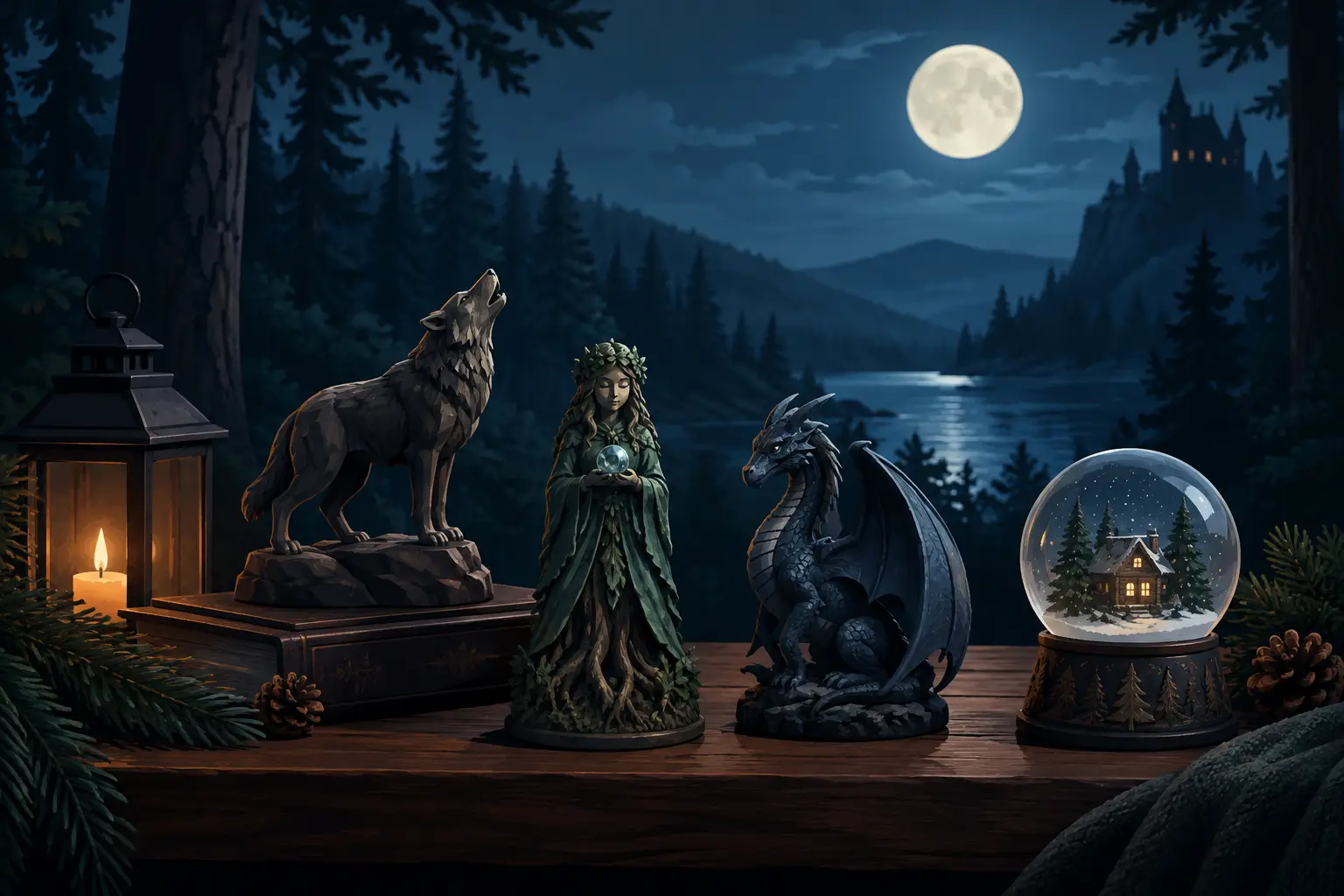
A creature on a shelf can be more than a creature on a shelf. The best folklore collectibles carry a place with them: a swamp road where something watched from the reeds, a mountain town with a story locals still tell, a roadside warning passed from one generation to the next. They give old legends a new home without stripping away the strange, regional details that made them worth remembering.
That is the thrill of collecting America’s legendary creatures. You are not just gathering monsters. You are building a map of the stories that haunt the country.
Why Folklore Collectibles Feel Personal
Most people do not fall for a regional legend because it has the most frightening teeth. They fall for it because it feels close. Maybe it comes from their home state. Maybe they heard about it on a family road trip, in a local podcast, at summer camp, or from a friend who swore they saw something in the woods.
Folklore is rooted in place. A creature shaped by foggy coastlines should not feel interchangeable with one born from desert heat or Appalachian hollows. Its story reflects local landscapes, anxieties, humor, history, and imagination. When a collectible keeps that identity intact, it becomes a tiny piece of cultural geography.
That is also why a shelf full of folklore figures can feel more alive than a shelf of generic monsters. Each character has a territory. Each one has a reason to exist. A collector can point to a figure and say, “That one is from there,” whether “there” means their hometown, a favorite vacation stop, or a state they have always wanted to visit.
The personal connection works for gifts, too. A folklore figure tied to someone’s state can be far more memorable than another candle, mug, or standard horror collectible. It says you found something specific to their corner of the map.
The Difference Between a Monster and a Legend
A monster can be invented anywhere. A legend earns its shape over time.
Regional folklore creatures are rarely neat, fixed characters. One witness says it had wings. Another says it moved like a deer. A newspaper account changes the details. A neighbor adds a warning. That instability is part of the magic. Legends survive because people keep retelling them, reshaping them, and arguing about what really happened near that bridge, cave, lake, or treeline.
A great collectible figure should honor that unruly spirit rather than flatten it into a familiar horror template. It does not need to reproduce every version of a story. It should, however, preserve the details that make the creature recognizable: its setting, silhouette, habits, and local reputation.
That is a creative balancing act. Make a figure too literal, and it can lose personality. Make it too cute, and the unease disappears. Make it too scary, and it may lose the playful charm that makes a character collectible. The sweet spot is a design that feels displayable at first glance and increasingly strange the longer you look at it.
What Makes Folklore Collectibles Worth Keeping
Collectibility is not only about rarity. A limited run can create excitement, but scarcity alone does not build affection. The figures people keep, photograph, rearrange, and talk about are the ones with a point of view.
For folklore collectibles, that point of view often comes from four things:
- A clear connection to a real region and its legends
- A distinctive character design that does not blur into every other cryptid
- Enough story to spark curiosity beyond the figure itself
- A larger collection concept that gives each creature company
The fourth piece matters more than it may seem. A single strange beast is fun. A growing cast of creatures from across the United States becomes a world. It invites collectors to choose favorites, represent their state, chase the next release, and imagine unlikely encounters between legends from opposite ends of the country.
Fablins approaches that idea with a simple challenge: 50 states. 50 legends. The format gives every figure a home turf while turning the full collection into a creature-filled American atlas.
Build a Shelf That Tells a Story
A folklore display does not have to be organized by release date or rarity. Those are valid collector instincts, but regional legends offer more interesting ways to arrange a collection.
You might group creatures by landscape: forest dwellers in one corner, river and swamp things below them, high-desert oddities on another shelf. You might build a travel map across your display, placing each figure according to where its story began. Or you might pair figures with personal memories - the state where you grew up, the state where you went to school, the place where a rain-soaked roadside sign made you wonder what was out there.
The goal is not museum perfection. A good display should make somebody ask a question. “What is that?” is an invitation to tell a story, and stories are the natural habitat of folklore.
Packaging, art cards, creature notes, and state markers can add to that experience when they give context rather than clutter. A name alone is a start. A few well-chosen details about where the legend lives can turn a cool object into a conversation piece.
Collect With Curiosity, Not Just Completionism
Completion collecting has a special pull. There is real satisfaction in seeing an empty space on a shelf and knowing exactly which creature belongs there. A state-by-state line makes that urge especially powerful because the finish line is clear, even if the path there is full of surprises.
Still, the strongest collections have room for curiosity. Start with your home state if that is what calls to you. Choose the creature with the wildest silhouette. Pick up a figure because the legend sends you looking for old newspaper clippings and campfire stories afterward. There is no wrong entry point.
It also depends on what you want from collecting. Some fans want a complete display with a creature from every state. Some want the weirdest handful possible. Some want a rotating seasonal shelf: swamp creatures for humid summer nights, shadowy mountain legends for October, winter haunts when the trees are bare. A collection can be orderly, chaotic, or proudly unfinished.
That freedom is part of the fun. Folklore itself has never behaved like a checklist.
Respect the Story Behind the Figure
Folklore belongs to communities before it belongs to merchandise. That does not mean legends must remain locked away in old books and whispered warnings. It means collectors and creators should treat their origins with care.
The most respectful approach is to name the region, avoid claiming certainty where stories are disputed, and recognize when a tale is part of a living cultural or Indigenous tradition rather than an open-ended monster story. Not every legend should be remixed in the same way. Context matters.
Care also makes the collectible better. Specificity gives a creature weight. It is more compelling to know why a legend is associated with a particular landscape than to receive a vague label like “spooky forest monster.” The details are where the chills live.
Let the Strange Parts Stay Strange
There is a temptation to make every creature polished, familiar, and easy to explain. American folklore is more interesting than that. It is full of contradictory sightings, suspicious lights, impossible tracks, cursed roads, oversized animals, phantom sounds, and things that might have been a bear - except nobody who saw it thinks it was.
Folklore collectibles work best when they leave a little mystery intact. A figure can tell you where a legend comes from, but it does not need to solve it. In fact, it should not. The unanswered question is what keeps the story moving from shelf to shelf, town to town, and person to person.
Choose the creatures that make you pause. Learn the place behind them. Then give the legend a spot where it can keep watching.