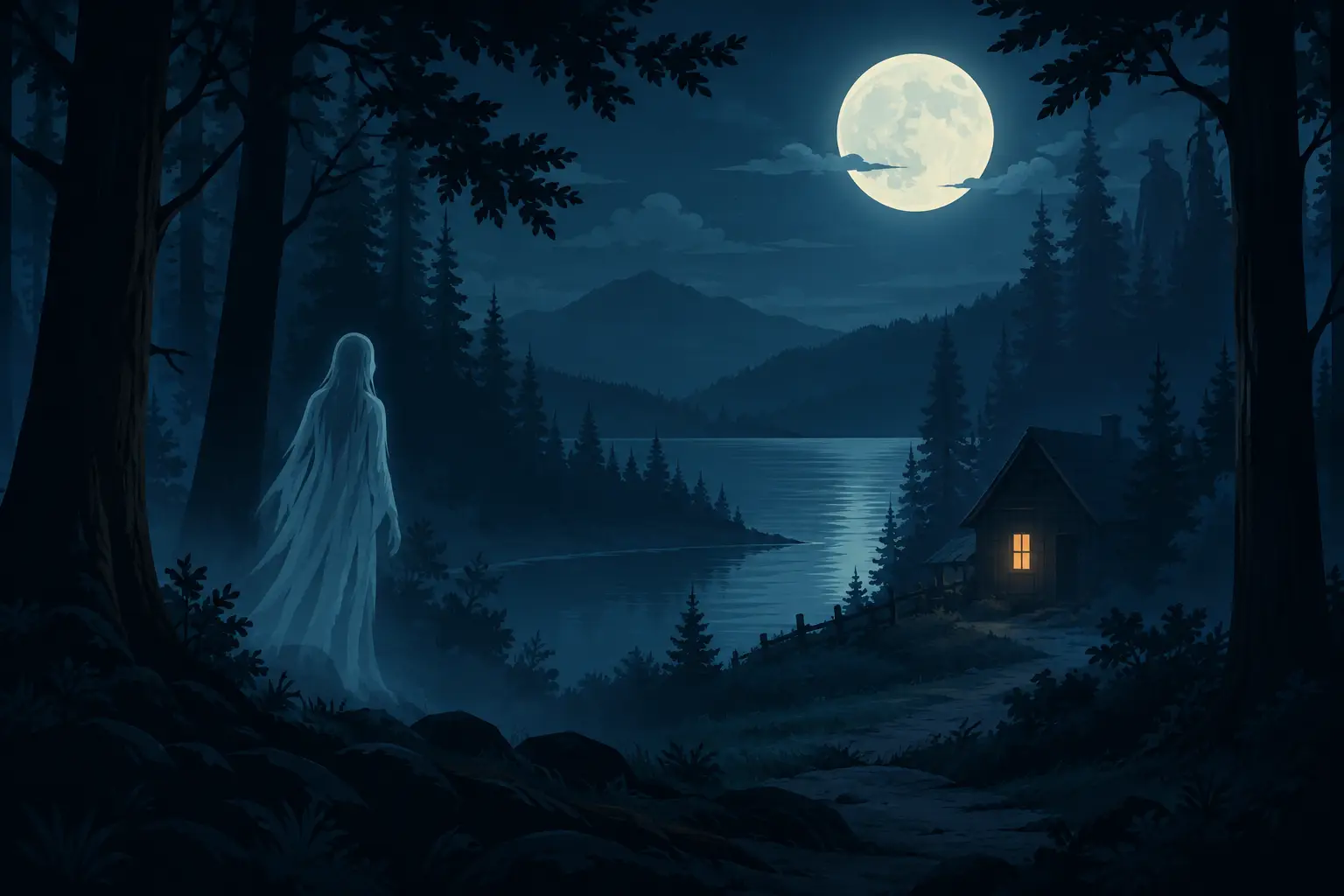
A guide to regional ghost legends begins where the map gets personal: the bridge everyone avoids after midnight, the hotel room with a story attached to it, the old road that seems to swallow headlights. Ghost stories are not spread evenly across America. They cling to particular places because those places remember something - a loss, a warning, a crime, a disaster, or simply a mystery no one has managed to put down.
That is what makes regional ghost lore worth collecting. A phantom hitchhiker in the Southwest is not the same kind of haunting as a grieving spirit in a New England inn or a river ghost in the Mississippi Valley. Each carries the weather, history, fears, and storytelling habits of home.
Why Regional Ghost Legends Feel So Real
A local ghost is rarely just a ghost. It is a piece of place-based memory wearing a familiar shape. The story may explain why a dangerous curve has a bad reputation, preserve the name of someone history left behind, or give a community a language for a tragedy that still feels too close.
That does not mean every tale is factual. Folklore is not a court record, and it becomes less interesting when treated like one. Names shift, dates get polished, and a quiet house may collect several different apparitions over a century. The important question is often not whether a witness report can be proven. It is why the story lasted long enough for locals to tell it again.
Regional legends also change with the landscape. In coastal towns, spirits arrive with fog, shipwrecks, and drowned sailors. Across old rail corridors, they appear near crossings and abandoned stations. In mountain country, a ghost may be heard before it is seen: a cry in a hollow, a knock at a cabin door, footsteps where no trail should be.
The best stories leave enough space for doubt. A legend that explains everything is a history lesson. A legend that leaves one cold spot unexplained can follow you home.
A Guide to Regional Ghost Legends by Landscape
The quickest way to understand a local haunting is to look at what surrounds it. Geography does not create every ghost story, but it gives the story its stage, its rules, and its particular brand of dread.
Old Cities and Colonial Roads
In the Northeast and Mid-Atlantic, ghost legends often gather around age. Old homes, taverns, graveyards, battle sites, and narrow streets provide a natural archive for the restless dead. These stories frequently feature figures in period clothing, soldiers who never left, mourners at windows, and residents whose routines continue long after the house changed hands.
There is a trade-off here. The oldest, most famous haunted sites can feel polished for visitors, with tidy stories and scheduled tours. The stranger tales tend to live in local historical societies, family memories, and the kind of roadside cemetery people mention only after they trust you.
Southern Porches, Swamps, and Plantations
Southern ghost lore carries heat, humidity, family history, and the long shadow of unresolved injustice. A haunted porch may hold the memory of a household. A swamp light may belong to someone lost in the water. A grand old property may attract ghost stories, but the strongest versions should never turn real suffering into decoration.
Approach these legends with curiosity and care. Many Southern hauntings touch on slavery, war, displacement, and violence. The eerie details matter, but so does the history beneath them. A ghost story can be entertaining without becoming an excuse to flatten the people whose lives shaped the place.
Rivers, Lakes, and Great Water
Water keeps ghosts busy. Along the Great Lakes, the Atlantic coast, the Gulf, and America’s great rivers, legends rise from storms, wrecks, flooded towns, and disappearances. A light across black water may be a warning. A voice calling from shore may be a trap. A passenger who appears soaked to the bone may vanish before anyone asks a name.
Water legends work because water refuses to hold still. It hides evidence, redraws shorelines, and turns familiar routes dangerous without much notice. If a local story says not to answer a voice from the river at night, you do not need to believe in ghosts to appreciate the survival lesson tucked inside it.
Highways, Railroads, and Empty Crossings
America’s modern ghost legends travel. Phantom hitchhikers, spectral cars, haunted tunnels, and railroad apparitions belong to a country built around movement. These stories often begin with a simple setup: someone needs a ride, someone sees a figure by the road, someone takes a shortcut and regrets it.
They also evolve fast. A tale once told about a horse-drawn carriage can become a story about a pickup truck. A vanished traveler might turn up in a back seat, then disappear at a familiar address. The details update because the fear remains the same: you are far from home, it is late, and something has entered the journey with you.
Mountains, Mines, and the Deep Woods
In Appalachia, the Rockies, the Ozarks, and the forests of the Pacific Northwest, the boundary between ghost lore and creature lore can get wonderfully thin. A noise in the trees might be a dead miner, a lost child, a warning spirit, or something older that was never human at all.
These are places where isolation shapes the tale. Mine disasters, logging camps, harsh winters, and difficult terrain leave behind stories of people who did not make it back. Respect the setting. Do not trespass, wander into closed mines, or treat a dangerous trail as a haunted attraction. The wilderness has enough real ways to humble a person.
How to Find the Stories That Belong to a Place
Start with the legend people tell when they are not trying to entertain tourists. Ask longtime residents about strange roads, closed schools, vanished buildings, old family warnings, and places children dared one another to visit. Listen for repeated details. A story told by three unrelated people has likely become part of the local folklore, even if each version disagrees on the name or date.
Local libraries, historical archives, newspaper collections, and oral-history projects can add texture. Look for floods, fires, wrecks, murders, epidemics, and community disputes near the legend’s setting. You are not trying to pin a ghost to a single verified event. You are trying to see what the story has been carrying.
Then compare versions without rushing to crown one as correct. In folklore, contradictions are clues. If one town says the woman in white is searching for her child and another says she is warning drivers away from the creek, the legend may have absorbed two separate fears. That is not a flaw. That is how a story survives.
Keep the Hauntings Human
Regional ghost legends are most memorable when they are treated as living culture rather than spooky trivia. Credit communities for their stories. Be cautious around sacred places and private property. Do not confuse a commercial haunted house with a local tradition, though both can be fun in their own way.
It also helps to separate ghosts from every other thing that goes bump after dark. A ghost is usually tied to a person, a death, or a location. A folk monster may belong to a wider landscape and follow rules that have nothing to do with unfinished business. America has room for both. In fact, that overlap is part of the fun: one state’s lonely road might hold a phantom driver, while the woods beyond it belong to something with far less human intentions.
That is the spirit behind Fablins: America’s legendary creatures deserve their own corners of the map, their own stories, and their own place on the shelf.
Let Your Home State Get Strange
The most rewarding ghost legend is not always the nationally famous one. It may be the tale attached to your hometown’s old theater, the abandoned mill near a relative’s house, or the lake where everyone knows not to whistle after sunset. Regional folklore turns an ordinary drive into a story-rich landscape.
So keep your ears open when someone says, almost casually, that a place is haunted. Ask what happened there. Ask who tells the story. Then give the legend room to remain strange. Some of America’s best ghosts do not need proof. They only need a road, a memory, and one more person willing to carry the tale forward.