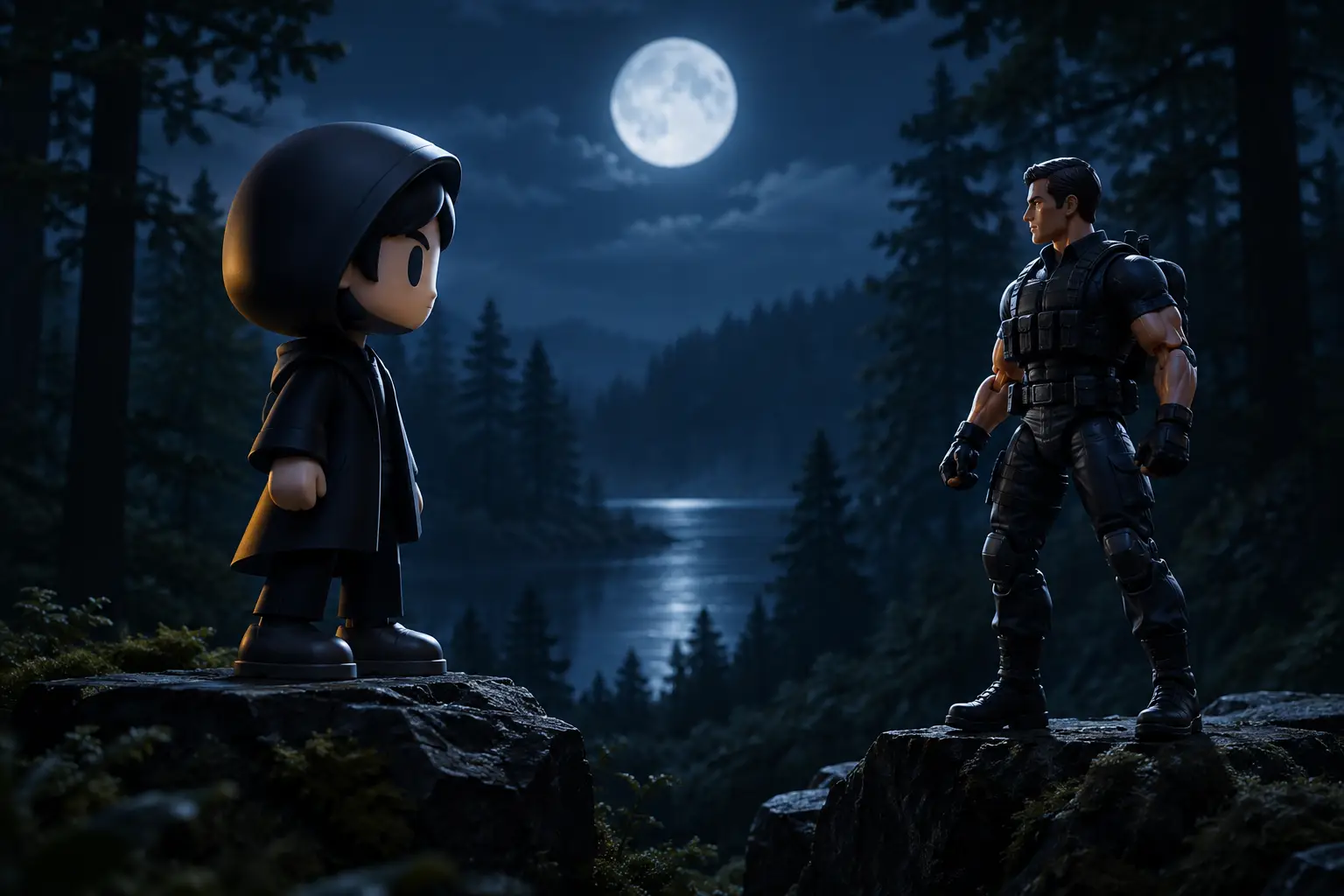
A figure can be built for battle, built for a shelf, or built to make someone stop mid-conversation and ask, “What creature is that?” The question of designer figures versus action figures is not about which one is more legitimate. It is about what kind of connection you want from a collectible: play, poseability, character, art, story, or a little of everything.
For monster fans and folklore hunters, that distinction matters. A figure inspired by a regional legend can be more than plastic and paint. It can be a tiny ambassador from a strange corner of America, carrying the mood of a swamp, mountain, back road, or local campfire tale into your home.
Designer Figures Versus Action Figures: The Core Difference
Action figures are traditionally made to move. Their joints, accessories, swappable hands, weapons, vehicles, and dramatic poses invite interaction. A superhero can throw a punch. A space soldier can man a cockpit. A monster can square off against another monster before being returned to the display.
Designer figures are usually made to be seen. They may have limited articulation or none at all, because the silhouette, sculpt, color choices, and personality take priority. The figure is treated as a small character sculpture, often shaped by a particular artist, visual world, or cultural reference.
That does not make designer figures precious little statues with no fun in them. A great designer collectible can be deeply playful. It simply puts the play in discovery, display, storytelling, and collecting rather than in recreating an action scene.
Think of it this way: an action figure asks, “What can this character do?” A designer figure often asks, “Who is this creature, and why can’t I stop looking at it?”
Articulation Changes the Experience
The clearest physical difference is articulation. Action figures may have joints at the neck, shoulders, elbows, wrists, torso, hips, knees, and ankles. More articulation gives collectors more poses, but it also creates visible seams and engineering limits. The sculpt has to accommodate movement.
Designer figures often avoid that trade-off. With fewer joints, an artist can create a cleaner body shape, a more dramatic hunch, an impossible grin, a broad wing, or a wonderfully strange set of proportions. A creature can look as though it stepped directly out of an illustrated field guide or a half-remembered nightmare.
Neither approach wins by default. If you love setting up scenes, photographing fights, or changing a display every week, articulation is a feature worth paying for. If you want a figure whose form feels deliberate from every angle, a fixed or minimally articulated design may be the stronger choice.
Poseability Is Not the Same as Personality
A figure standing still can still feel alive. Personality comes from posture, expression, texture, scale, and the details that suggest a larger world. A webbed foot, a chipped tooth, a faraway stare, or a regional symbol can tell more story than ten points of articulation.
That is why many collectors keep both kinds on the same shelf. An articulated creature may become the star of a photo setup, while a designer figure becomes the object people notice first when they walk into the room.
Character Design Carries More Weight
Action figures are often tied to a film, comic, game, or long-running franchise. Their job is to faithfully represent a character fans already know. Accuracy matters: the correct costume, the recognizable gear, the face that matches the screen version.
Designer figures can work from familiar characters too, but they leave more room for interpretation. An artist may exaggerate proportions, simplify a face, turn horror into charm, or use color in ways no natural creature ever would. The point is not always realism. The point is a memorable presence.
This makes designer collectibles especially natural for folklore. American legends rarely arrive with one official costume sheet. Stories shift from town to town. Descriptions change. A creature might be terrifying in one telling, mischievous in another, and oddly sympathetic in the next. That open space gives character designers room to honor a legend’s roots while creating a version that feels fresh enough to collect.
At Fablins, that space is part of the fun: America’s legendary creatures are not treated as generic monsters. Each one belongs somewhere. A state, a story, and a distinct patch of the country give the character its haunt.
Materials and Manufacturing Matter, But They Are Not Everything
People sometimes use “designer figure” to mean one specific material, such as vinyl, while action figures are commonly associated with molded plastic and complex assembly. There is some truth there, but the categories are not that tidy.
Designer figures can be vinyl, resin, PVC, soft plastic, or other materials. Action figures can use similar materials, too. What changes is how the material supports the design. Softer vinyl can give a figure a smooth, rounded, almost dreamlike quality. Harder plastics may hold sharper detail and support intricate joints. Resin can capture fine sculpting but is often less forgiving and more display-focused.
Paint application matters just as much. A simple palette can make a figure feel graphic and iconic. Layered washes, dry brushing, and tiny hand-painted details can make fur, scales, weathered skin, or swamp grime feel uncannily present. For collectors, the question is not merely “What is it made of?” but “Does the material help this creature become itself?”
Collecting Goals Are Different
Action-figure collectors may chase a favorite franchise, a specific scale, rare accessories, or the perfect team lineup. Completion can mean assembling every member of a squad or building a shelf where every character shares the same world.
Designer-figure collectors often collect by artist, sculpting style, colorway, theme, or emotional pull. One collector might want every strange woodland creature they can find. Another might build a shelf of bright, stylized monsters. Someone else might only buy figures tied to places they have lived, visited, or heard family stories about.
A state-by-state folklore collection adds a particularly satisfying kind of chase. It gives the shelf a map hiding in plain sight. You may start with the legend from your home state, then add a creature from a road trip, a college town, or the place your grandmother swears has something moving in the woods after dark.
That is also why a cohesive collection can feel more meaningful than a pile of unrelated purchases. Each figure stands on its own, but together they suggest a larger country full of local shadows.
Which Makes a Better Gift?
For a kid who wants to reenact favorite scenes, an action figure is usually the obvious answer. Accessories and articulation create immediate possibilities, and recognizable characters make the gift easy to understand the second the package opens.
For a teen or adult with a desk, bookshelf, horror display, or apartment that needs one weirdly wonderful resident, a designer figure may land harder. It feels less like a toy chosen at random and more like a character selected for them. That is especially true when the figure connects to their favorite cryptid, their home state, or their love of odd Americana.
Age is not the real dividing line. Plenty of adults want poseable figures, and plenty of younger collectors care deeply about color, sculpt, and lore. The better question is whether the person enjoys making scenes or curating a world.
The Best Shelf Has Room for Both
The strongest collections rarely obey strict category rules. A poseable werewolf can guard a row of stylized lake monsters. A highly detailed action figure can stand beside a squat, graphic designer creature and make both feel more interesting. Contrast gives a display rhythm.
What matters is intention. Buy an action figure when movement, accessories, and hands-on posing are central to the joy. Choose a designer figure when you want a singular character object, a strong sculpt, or a creature with a story built into its bones.
Leave a little space on the shelf, too. America is full of legends still waiting in the dark, and the next one you bring home may not fit neatly into either category.