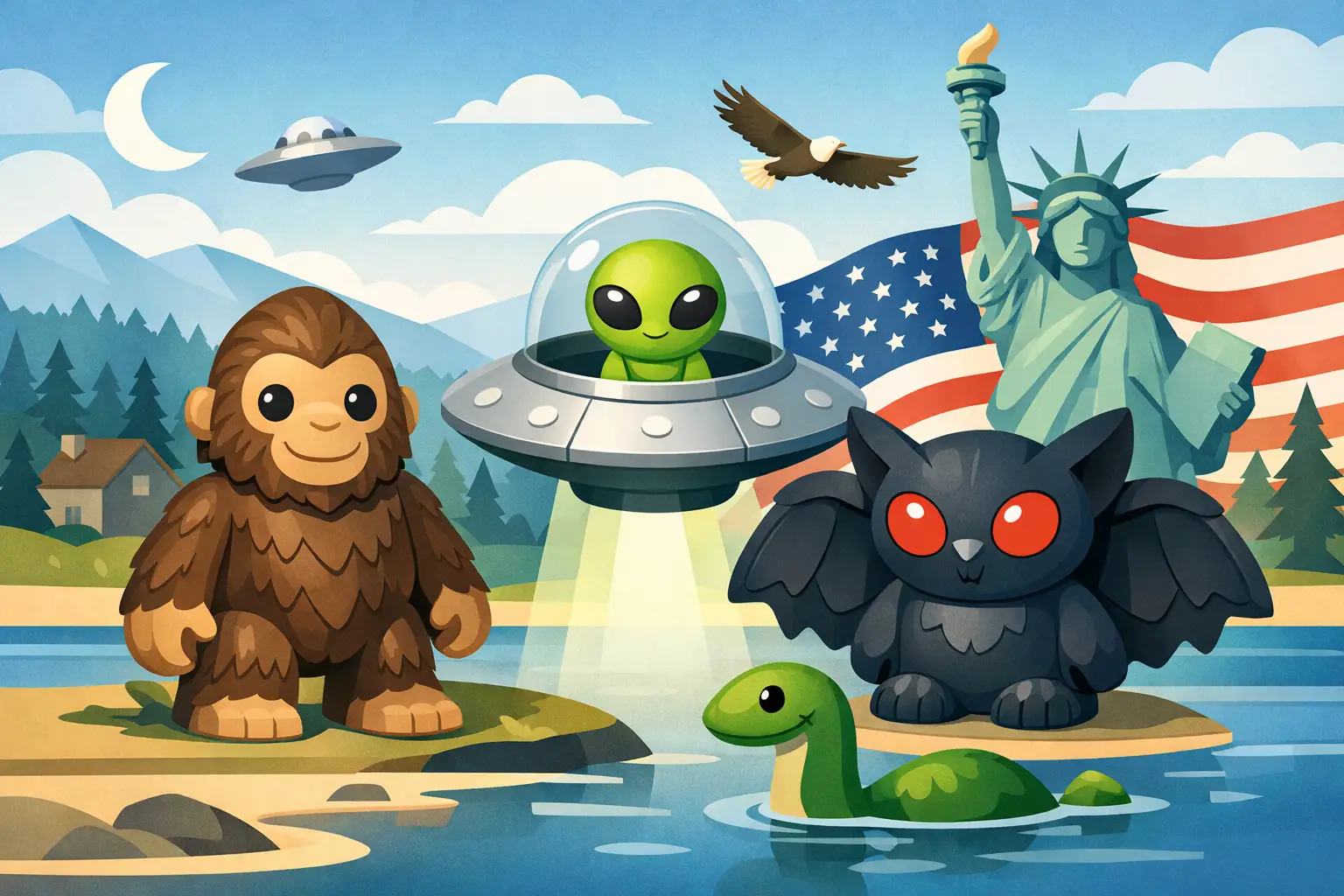
A jackalope on a shelf is more than a strange little creature with antlers. It is a piece of roadside America, a tall tale told with a wink, and a reminder that the country has always made room for the impossible. That is what makes cryptid toys different from ordinary monster merchandise. They give a body, a face, and a permanent place in your home to the creatures that haunt American folklore.
For collectors, the appeal is not only the scare factor. It is the story attached to the claws, wings, scales, or glowing eyes. A figure can point back to a hometown rumor, a family camping trip, an old newspaper clipping, or that one regional legend nobody outside the state seems to know. The best cryptid toys make those connections feel immediate.
Why Cryptid Toys Have a Different Kind of Magic
Classic monsters arrive with familiar rules. Everyone recognizes Dracula’s cape and Frankenstein’s bolts. Cryptids are wilder. Their stories shift from town to town, witness to witness, and decade to decade. They belong to dark highways, deep woods, riverbanks, abandoned mines, and places where somebody swears they saw something moving just beyond the tree line.
That uncertainty is part of the fun. A cryptid figure does not need to settle whether the creature was real. It can celebrate the fact that someone believed enough to tell the story again. Folklore survives because people keep passing it along, changing it slightly, and giving it new life. A collectible carries that tradition forward in a form built for desks, bookcases, and monster-filled display cases.
There is also a welcome sense of discovery. Bigfoot and Mothman have earned their fame, but American folklore is crowded with lesser-known beasts. Every region has its own weird weather, landscape, anxieties, and history. Naturally, it has its own monsters. A creature from the desert should not feel like one from an Appalachian hollow, a Great Lakes shoreline, or a Gulf Coast marsh.
The Best Cryptid Toys Start With Place
A great figure begins with a question: where did this creature come from, and why would it exist there? Place gives a cryptid its charge. It turns a cool design into a character with roots.
A horned beast tied to a western legend may carry the swagger of frontier storytelling. A swamp creature might feel ancient, watchful, and half-hidden by reeds. A nocturnal visitor from a coal town may reflect local disaster, superstition, or the eerie glow of industrial landscapes. The details matter because they keep the figure from becoming a generic monster with a state name pasted on afterward.
This is why regional collecting feels so personal. Someone may choose a creature because it represents the state where they grew up. Another collector might pick one up after a road trip, a move, or a visit to family. A gift giver can find a figure that says, in the strangest possible way, I remembered where you are from.
Fablins is built around that idea: 50 states. 50 legends. The collection treats America as a map full of creatures, with each state offering a new corner of the folklore world to bring home.
What Collectors Look For Beyond the Monster
The creature gets the first glance, but the details decide whether a figure earns permanent shelf space. Strong silhouette comes first. You should be able to recognize a memorable cryptid from across the room, whether it is crouched, hovering, lumbering, or staring back with too many eyes.
Character matters just as much. Some collectors want a figure that looks genuinely unnerving. Others want weirdness with charm: tiny fangs, oversized feet, a mischievous expression, or a pose that suggests the creature was caught doing something suspicious. Neither approach is better. It depends on the tone of the collection and the room where it will live.
Story is the final piece. A figure becomes more collectible when its origin is easy to remember and fun to retell. The best lore does not require a lecture. A few vivid facts can do the job: the town it stalks, the strange sound it makes, the year sightings began, or the local warning people still repeat. That small narrative spark turns a display into a conversation.
Building a Collection That Feels Like Yours
There is no wrong way to collect creatures, but a theme makes the hunt more satisfying. Some people build by home states and family roots. Others chase the weirdest designs, the creepiest legends, or the creatures tied to favorite vacations. A state-by-state collection offers a particularly satisfying challenge because every new figure expands both the shelf and the map.
Start with a creature that means something to you. Maybe it comes from your state, your college town, or a place where you once took the long way home through the woods. Then let the collection wander. The fun is in meeting legends you did not know existed.
If you are displaying several figures, give them room to tell their own story. Group them by region, landscape, or mood. Woodland creatures can gather beneath a faux branch or beside a stack of old field guides. Desert legends can stand against warm stone colors. Night flyers look especially good with darker backdrops and a little open space around their wings.
Avoid making every shelf look too orderly. Cryptids are supposed to feel like they slipped in from somewhere else. A few uneven heights, old postcards, trail maps, or vintage-looking signs can make a display feel like a cabinet of American oddities rather than a row of products.
Respect Makes the Weirdness Better
Folklore can be playful, but it is not empty. Many regional legends are tied to real communities, local tragedies, Indigenous traditions, immigrant stories, labor history, or long-held beliefs. Treating every creature as a joke can flatten the very thing that makes it interesting.
That does not mean collectible figures need to be solemn. A little mischief is part of the territory. It means the design and storytelling should recognize that legends belong to places and people before they belong to a shelf. When a creature’s roots are handled with curiosity and care, the figure gains depth. It feels less like a costume and more like a small ambassador from a specific American story.
Collectors can take the same approach. Learn the version of the legend told closest to its source. Notice how the story changes elsewhere. Keep the mystery intact instead of demanding one official answer. Cryptids thrive in the gaps.
Why They Make Better Gifts Than Another Ordinary Collectible
A cryptid figure is specific without being risky. It works for the friend who loves horror but already owns every familiar slasher reference. It works for the history buff with a soft spot for local lore, the traveler who collects memories by state, and the teenager whose room is slowly becoming a monster museum.
The strongest gift choices have a personal hook. Pick a legend from the recipient’s home state, a place they miss, or somewhere they have always wanted to visit. Add the story when you hand it over. Suddenly, the gift is not just a cool little monster. It is a creature with a territory, a rumor, and a reason it found its way to them.
Keep the Map Strange
America is full of famous monsters, but its most interesting creatures are often the ones waiting off the main road. They live in local warnings, diner conversations, regional postcards, and stories told with complete seriousness until the teller notices your expression.
Let your collection make room for those legends. Choose the creature from home, then choose one from somewhere you have never been. Put them side by side and let the map get stranger. That is how a shelf becomes a journey through America’s legendary creatures.